






Chapel Hill Tubal Reversal Center
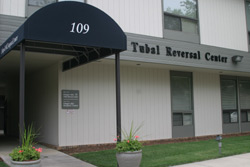
109 Conner Drive Suite 2200, Chapel Hill, NC 27514 (919) 968-4656

Archive for the ‘ivf’ Category

Tubal Reversal Specialist - Dr. Monteith’s Comments

Tuesday, April 15th, 2008

My First Day at Nourishing Hopes and Dreams

My first day as a tubal ligation reversal specialist will always be remembered. I began my training with Dr. Berger during the first week of January 2008. We started the day off by meeting the patients who would be undergoing tubal ligation reversal at Chapel Hill Tubal Reversal Center.

I met four patients of different ages, backgrounds, and ethnicities . They were all very different people who all desired the same thing: reversal of their tubal ligation.

  • The first patient was in her forties, she had emigrated from Ethiopia, her last child was more than twelve years ago, and she desired a chance to have another child.
  • The second patient was in her thirties and her previous husband had died unexpectedly. She had children but her fiancé did not have any children. Together, they desired a child.
  • The third patient,in her late twenties, had two children and a tubal ligation. Several years later she subsequently found a new partner and he desired a child with her. So while he was deployed overseas, she came for a tubal ligation and a chance for a new future when he returned from his military deployment.
  • The fourth patient was in her late twenties and had several children. When she and her partner were in their early twenties they were financially maxed out and she had her tubes tied as an act of desperation. Several years later, she and her husband subsequently became financially stable and they wanted another child. They considered IVF but decided that a reversal was a better option for them. We also learned of an extremely sad story from this patient. She had a friend who had a tubal ligation. This friend had all of her four children die overnight in a house fire. This friend desperately has hope for a future reversal of her tubal ligation and was hoping to obtain a tubal reversal in the future.

All of the tubal reversal surgeries went well that day. The patients all did well and had technically excellent tubotubal reanastamosis (tubal ligation reversal) procedures. They all recovered well and went home to pursue their quest to add to their families.

For as long as a live, I will never be able to forget these women, their partners and the stories they told. I can never forget their quest to add children to their lives. For them I hope they attain what they desire.

My first lesson as a Tubal Reversal Specialist was that no one can predict the future, but if you always look hard enough you can always find a way - and someone to help- to correct prior mistakes.

Tubal Reversal Information

Saturday, April 5th, 2008

Tubal reversal information is plentiful on the internet, but not everything that you read is accurate or factual. Of the websites that provide information about tubal ligation reversal, the one from Chapel Hill Tubal Reversal Center is most complete and accurate. It describes the various types of tubal ligation procedures and the different tubal reversal procedures that can be used. If you are interested in learning about tubal reversal, spend some time looking at the different pages on this extensive site. There is a search box at the top of every page that can direct you to specific information about any issues relating to tubal ligation reversal. Take a look also through the many topics of information on the Tubal Reversal Blog.

Tubal Reversal Surgery

Tubal ligation reversal is usually considered to be a major operation, taking several hours and requiring a hospital stay of 1 to 5 days. Complete recovery is often described as taking 4 to 6 weeks. However, the tubal reversal procedure that Dr. Berger has developed is performed as outpatient surgery with no hospital stay required and with complete recovery generally within 5 to 10 days. Since hospitalization is not required, the cost of the tubal reversal procedure is reduced by half or two-thirds of the cost when performed in a hospital. Patients are more comfortable during their post operative recovery and are able to return to work and other normal activities much faster. A free video or DVD of Dr. Berger’s tubal reversal procedure is available on the Chapel Hill Tubal Reversal Center website.

Risks of Tubal Reversal

As with any surgery, complications are always a possibility. Although rare, these may include bleeding, infection, damage to other organs, or complications of anesthesia. The most significant risk associated with tubal ligation reversal is the long term risk of having an ectopic pregnancy. This risk is increased from approximately 2% of pregnancies in the general population to approximately 10% after tubal reversal. Fortunately, the medical problem of a ruptured tubal pregnancy can be prevented by following an early pregnancy monitoring protocol that has been described by Dr. Berger and is recommended to all women after a tubal reversal procedure.

Alternative Treatment

Rather than “untying” their tubes, some women are advised to be treated by in vitro fertilization (IVF). However, IVF is more complicated and expensive, the pregnancy rate after IVF is not as high as after tubal reversal, and there is a very high incidence of multiple births (approximately 30%) after IVF. Further, there is concern about the possible long term effect of the use of potent hormones to stimulate the ovaries to produce many eggs (called “super-ovulation”) and the suspicion that it might increase the risk of ovarian cancer later in life.

Am I a Candidate for Tubal Reversal?

Although most women have been told that tubal ligation is permanent, in fact, the vast majority of tubal ligation procedures are reversible. The operative report from your tubal ligation will give a good indication if the procedure can be reversed. When there is any doubt about this, diagnostic laparoscopy can be performed to examine the fallopian tubes and then decide whether to proceed with the reversal operation.

Pregnancy Rates After Tubal Reversal

Pregnancy and birth rates after a tubal reversal are significantly better than after IVF. Neither procedure, however, can guarantee that pregnancy leading to birth will occur. Even when the fallopian tubes have been repaired, other factors – such as age, menstrual cycle regularity, ovulation or other hormonal disorders, and the fertility of the male partner - may determine when, or whether, conception will occur.

Women under the age of 30 who have a tubal reversal have an 82% pregnancy success rate; between 30-34 the pregnancy rate is 76% and for women ages 35-39, the pregnancy rate is 67%. The pregnancy rate declines for women 40 and older in accordance with the natural decline in fertility with age. However, pregnancy rates are higher for women of any age following tubal reversal than after IVF.

More Tubal Reversal Information

If you would like to discuss your individual situation with a Tubal Reversal Nurse, call (919) 968-4656. The experienced nurses at Chapel Hill Tubal Reversal Center are always happy to provide information about tubal ligation reversal. You can also exchange information with other women on the Tubal Reversal Message Board.

Will Tubal Reversal Become a Lost Skill?

Sunday, January 20th, 2008

Tubal reversal surgery is becoming a lost skill among doctors in training, according to an article in the January 2008 issue of Fertility and Sterility, the most influential medical journal for reproductive specialists. The article states, “The future for tubal anastomosis seems grim…and, like the Roman Empire, may be lost in Antiquity.”

The thesis of the article was that almost exclusive concentration on IVF and related reproductive technologies has decreased the training of reproductive specialists in tubal reparative surgery.

“The success of surgical tubal anastomosis is directly linked to surgical experience. With the advent of ART, surgical training has markedly declined, and there remain few fellowship programs with meaningful numbers of surgical cases. One study reported that most of the current Reproductive Endocrinology and Infertility fellows performed less than 10 procedures and 35% of program graduates performed no surgical tubal reversals in the previous year.”

Chapel Hill Tubal Reversal Center is for Patient Care

Patients have occasionally asked me if, with the experience I have had performing tubal reversals, I was teaching other physicians to perform this kind of surgery. Since Chapel Hill Tubal Reversal Center is a private practice dedicated to patient care - not a training institution - I have not previously taught other physicians the skills acquired over the 30 years I have been practicing as a reproductive surgeon. Having residents or RE fellows coming here for brief periods would allow only an introduction to the techniques of tubal reparative surgery. This would be insufficient for them to acquire all of the skills necessary to perform tubal reversals.

Introducing Dr. Charles Monteith

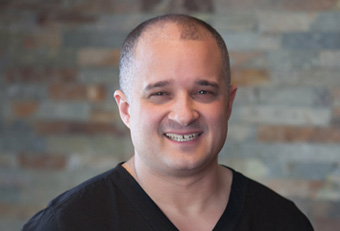
Recently, Dr. Charles Monteith, an Assistant Professor of Obstetrics and Gynecology at the UNC School of Medicine, requested a mentoring relationship with me to learn the techniques of tubal reversal surgery. Dr. Monteith is a board certified obstetrician-gynecologist with 6 years of surgical experience subsequent to completing his residency at the UCSF Medical Center. He has begun assisting me in surgery and will continue to do so on selected dates during the next 6 months. Some of the patients who have come here since January 1st have already met him. With his prior surgical experience, and after an extended training period, Dr. Monteith will become certified as a Tubal Reversal Specialist and join our staff in July 2008.

Dr. Berger’s Comment

My response, therefore, to the Fertility and Sterility article is that tubal anastomosis will not become “lost in Antiquity”. Perhaps in the future, other physicians will follow the path that Dr. Monteith has chosen to learn the skills and techniques required for successful tubal reversal operations. More information about Dr. Monteith will be available in forthcoming blog posts and on the Chapel Hill Tubal Reversal Center website.

Tubal Reversal Is The Best Option!

Wednesday, December 12th, 2007

Tubal ligation was intended to be permanent. Circumstances can change and women with tied tubes may want more children. When this happens, they often are told that treatment by in vitro fertilization (IVF) is their only option. In reality, tubal reversal is the best choice.

Comparing Tubal Reversal and IVF

Once the fallopian tubes are repaired by tubal reversal surgery, there is a chance every month for pregnancy to occur naturally. This is why tubal reversal is more successful than IVF.

IVF requires a woman to have weeks of hormone injections to produce many eggs each time pregnancy is attempted.  The pregnancy rate with IVF is approximately 25% per treatment cycle. Most women require multiple IVF treatments to become pregnant. At a cost of $12,000 per cycle, this treatment becomes expensive very quickly!

The overall pregnancy rate  among Dr. Berger’s tubal reversal patients is 70%, and the cost of a tubal reversal procedure is less than half that of a single IVF treatment cycle.  This graph shows that pregnancy rates are higher after tubal reversal performed by Dr. Berger than after IVF. This is true regardless of a woman’s age.

Pregnancy Rates by Age After Tubal Reversal vs IVF

Tubal ReversalTubal Reversal IVFIVF

<b>Pregnancy Rates After Tubal Reversal vs IVF</b>.

Conclusion About Tubal Reversal vs IVF

Tubal reversal has a higher pregnancy rate then in vitro fertilization and is much less expensive when performed at Chapel Hill Tubal Reversal Center.

Are There Hidden Costs of Tubal Reversal?

The discounted fee when paying in full at the time you schedule tubal reversal at Chapel Hill Tubal Reversal Center is $5900. This is an all-inclusive fee. There are no hidden charges! The fee covers the following:

Preoperative record review and consultation
Dr. Berger’s surgical fee
Anesthesiologist’s and nurse anesthetist’s fees
Surgical supplies
Operating facility fees
Postoperative pain medication and antibiotics
Follow-up care

What To Expect at Chapel Hill Tubal Reversal Center

Most of our patients come to Chapel Hill from other states and from other countries. To minimize the time you spend here, your preoperative consultation will be scheduled for the day preceding your tubal reversal. On the day of your reversal procedure, you will spend the morning at Chapel Hill Tubal Reversal Center and the rest of the day at your hotel room at the Sheraton-Chapel Hill. The following morning, one of our nurses will visit you at your hotel for a postoperative check prior to your returning home. You will be here for two nights, on the day prior to surgery for your preoperative consultation and on the day of your tubal reversal procedure.

Julia Smith, RN is the Nurse Adminstrator of Chapel Hill Tubal Reversal Center.I Will Be Happy To Assist You

If you would like additional information or would like to schedule your tubal reversal procedure, please feel free to contact me. You can reach me from 8 am to 8 pm Eastern Time at (919) 656-8204 or by e-mail at JuliaS@tubal-reversal.net. I will be glad to answer any questions you might have!


Submitted by Julia Smith, RN
Nurse Administrator


Special Report


Answers to seven important questions to find out if tubal reversal is right for you.

Request this Special Report:


Call 919 968-4656 to speak with a Tubal Reversal Nurse.

Call (919) 968-4656 To Speak With a Tubal Reversal Nurse

Pregnancy Announcements | Daily News | Latest Additions | Press | MD News | Site Map | Español
Website updated May 12th, 2008 Chapel Hill Tubal Reversal Center© Chapel Hill Tubal Reversal Center
109 Conner Drive Suite 2200, Chapel Hill, NC 27514 (919) 968-4656
   Tubal Reversal News ?>
109 Conner Drive Suite 2200, Chapel Hill, NC 27514 (919) 968-4656