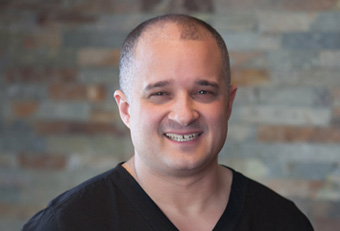
Tubal Reversal Specialist - Dr. Monteith’s Comments
Tuesday, April 15th, 2008My First Day at Nourishing Hopes and Dreams
My first day as a tubal ligation reversal specialist will always be remembered. I began my training with Dr. Berger during the first week of January 2008. We started the day off by meeting the patients who would be undergoing tubal ligation reversal at Chapel Hill Tubal Reversal Center.
I met four patients of different ages, backgrounds, and ethnicities . They were all very different people who all desired the same thing: reversal of their tubal ligation.
- The first patient was in her forties, she had emigrated from Ethiopia, her last child was more than twelve years ago, and she desired a chance to have another child.
- The second patient was in her thirties and her previous husband had died unexpectedly. She had children but her fiancé did not have any children. Together, they desired a child.
- The third patient,in her late twenties, had two children and a tubal ligation. Several years later she subsequently found a new partner and he desired a child with her. So while he was deployed overseas, she came for a tubal ligation and a chance for a new future when he returned from his military deployment.
- The fourth patient was in her late twenties and had several children. When she and her partner were in their early twenties they were financially maxed out and she had her tubes tied as an act of desperation. Several years later, she and her husband subsequently became financially stable and they wanted another child. They considered IVF but decided that a reversal was a better option for them. We also learned of an extremely sad story from this patient. She had a friend who had a tubal ligation. This friend had all of her four children die overnight in a house fire. This friend desperately has hope for a future reversal of her tubal ligation and was hoping to obtain a tubal reversal in the future.
All of the tubal reversal surgeries went well that day. The patients all did well and had technically excellent tubotubal reanastamosis (tubal ligation reversal) procedures. They all recovered well and went home to pursue their quest to add to their families.
For as long as a live, I will never be able to forget these women, their partners and the stories they told. I can never forget their quest to add children to their lives. For them I hope they attain what they desire.
My first lesson as a Tubal Reversal Specialist was that no one can predict the future, but if you always look hard enough you can always find a way - and someone to help- to correct prior mistakes.

I approached the building and entered through a passageway which led me into a courtyard. The first thing I remember was hearing the sound of a fountain echoing in the courtyard walls. It invoked a soothing feeling. The fountain was placed next to a set of stairs and was standing on a bed of small, rounded river rock. The stairs led up to the second level. I ascended the stairs to the second floor. I was extremely tired but I could not but help feel a sense of calmness within the courtyard. The experience brought back memories of being in church as a child. There was an overwhelming sense of peacefulness.
Women come from all over the world to
At first, the dye will fill the uterine cavity. It is essential that the dye actually enter the fallopian tubes up to the point where the anastomosis was performed. Often, this does not occur due to spasm of the sphincter between the uterus and tubes (shown by the arrows) or from mucus or calcium deposits in the proximal tubal segments.
If the dye passes through the anastomosis sites, the fallopian tubes are open. Most radiologists do not consider the x-ray to show tubal patency (openness) unless dye spills into the abdominal cavity. When this happens, the diagnosis of tubal patency is conclusive.
We often see x-rays where dye has passed through the tubal anastomosis site, but has not yet spilled into the abdominal cavity. This is due to an insufficient amount of dye being injected into the tubes. The radiologist may mistakenly believe the tube is blocked when in reality it is open.