








Chapel Hill Tubal Reversal Center
109 Conner Drive Suite 2200, Chapel Hill, NC 27514 (919) 968-4656

Tubal Reversal Blog ‘monopolar tubal coagulation’

Untying Tied Tubes: Monopolar Electrocoagulation

May 17th, 2008

History of Tubal Sterilization

The first tubal sterilization method was tubal ligation and resection, reported in 1881! Ligation and resection- or ‘tying tubes’ was the most common surgery for sterilization until the advent of laparoscopic surgery in the mid 1900’s. As laparoscopic surgery became more popular, electrocoagulation (electrical burning) of the fallopian tubes became a popular method of female sterilization.

Tubal Electrocoagulation Results in Burned Tubes

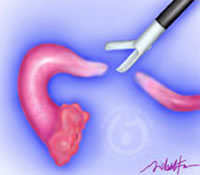
Monopolar tubal coagulation is one method of tubal sterilizationThe first description of laparoscopic electrocoagulation, in 1962, used a type of electrical current termed monopolar current – hence the term monopolar tubal coagulation. This sterilization procedure uses electric current to destroy part of the fallopian tube. The burned part of the tube turns into scar tissue and the remaining tubal segments are separated and blocked. This was a very popular form of laparoscopic sterilization from 1970 until the early 1980’s.

Although monopolar electrocautery is a very effective form of tubal sterilization, studies showed that it had a higher complication rate than for electrocoagulation using bipolar current, where the damage to the fallopian tube (or other structures) is more easily restricted. Sterilization procedures done by monopolar current are gradually decreasing and being replaced with bipolar current. Monopolar cautery, however, is still used for tubal sterilization by some doctors.

Can Burned Tubes Be Repaired?

Patients often ask whether burned tubes can be repaired. In most cases, monopolar electrocoagulation sterilization procedures can be reversed. The success of reversal is dependent on the amount of fallopian tube that has been damaged by the electrocautery. This information is usually available in the tubal ligation operative report. When in doubt, a screening laparoscopy can be performed. Approximately 50% of patients at Chapel Hill Tubal Reversal Center will become pregnant after a reversal of a monopolar coagulation sterilization procedure.

Many people, including doctors, have been told that tubal sterilization is permanent and irreversible. Although monopolar tubal coagulation is intended to be permanent, this procedure is usually revesible. The best place for women to have their tubes ‘untied’ when they have been burned is Chapel Hill Tubal Reversal Center – the only medical facility that specializes in reversal of tubal ligation.

Submitted by Dr. Charles Monteith

Untying Tied Tubes: Bipolar Electrocoagulation

May 15th, 2008

History of Tubal Sterilization

The first tubal sterilization procedure, reported in 1881, was tubal ligation and resection. Ligation and resection – or ‘tying tubes’ was the most common surgery for sterilization until the advent of laparoscopic surgery in the mid 1900’s. As laparoscopic surgery became more popular, electrocoagulation (electrical burning) of the fallopian tubes became an additional method of surgical sterilization. Tubal sterilization by electrocoagulation uses electric current to cut and destroy the portion of the tube that is exposed to the electric current. These portions of the tube eventually heal and close.

Monopolar Tubal Coagulation

Tubal sterilization with monopolar coagulation forceps.The initial method of laparoscopic tubal coagulation, in 1962, used a type of electrical current termed monopolar current. Monopolar tubal electrocoagulation was a popular type of laparoscopic sterilization through the 1970’s and 1980’s. The medical community began to realize that the complication rate from this form of electric surgery was higher than for other electric surgical methods of tubal sterilization. Sterilization procedures done by monopolar current have gradually been replaced with bipolar current.

Bipolar Electrocoagulation of the Fallopian Tubes

Tubal sterilization with bipolar coagulation forceps.The first reported sterilization using bipolar electrocoagulation was in 1972. This was done via a laparoscope inserted just under the belly button. During bipolar coagulation, the electrical current can be more precisely controlled, resulting in less tubal damage than monopolar coagulation. This sterilization procedure results in higher reversal success rates than monopolar electrocoagulation.

Reversing Tubal Sterilization

Many people, including doctors, mistakenly believe that tubal sterilization is permanent and irreversible. Although bipolar coagulation sterilization is intended to be permanent, this procedure can be reversed successfully in almost all cases. The success rates depend on how many different areas of the tube were damaged with electrocautery. Approximately 60- 70% of patients at Chapel Hill Tubal Reversal Center become pregnant after a reversal of a bipolar coagulation sterilization procedure. Chapel Hill Tubal Reversal Center is the only medical facility that specializes exclusively in reversal of tubal ligation. We perform tubal ligation reversals every day, and our tubal reversal doctors are experts in reversing all types of tubal ligations- or ‘untying’ tubes that have been ‘tied’!

Submitted by Dr. Charles Monteith

More information on » monopolar tubal coagulation

Special Report

Answers to seven important questions to find out if tubal reversal is right for you.

Telephone 919 968-4656 to speak with a Tubal Ligation Reversal Nurse

Call a Tubal Reversal Nurse
for a free consultation -

(919) 968-4656

Pregnancy Announcements | Latest Additions | FAQs | Press | MD News | Mission Statement | Privacy Policy | Doctors Directory | Site Map


http://www.tubal-reversal.net/includes/footer.php  was last modified on November 1st, 2009 18:15:35

Chapel Hill Tubal Reversal Center.
109 Conner Drive Suite 2200, Chapel Hill, NC 27514
Tel: (919) 968-4656     Fax: (919) 869-1976
