





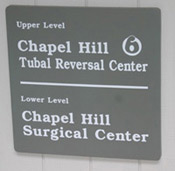
 A Personal Choice specializes exclusively in tubal surgery. We do not perform in vitro fertilization (IVF). The majority of our patients come for reversal of tubal ligation, but we also treat patients for repair of blocked fallopian tubes.
This article examines pregnancy rates after tubal surgery for mildly and severely scarred fallopian tubes. We also provide a pregnancy rate comparison with IVF.
Infertility And Blocked Fallopian Tubes
 Many couples will have trouble with becoming pregnant. As many as 12% of couples will suffer from infertility.
When infertility exists, 50% of the time is is a male related problem (low or absent sperm count) and 50% of the time it is a female related problem.
There are many causes of female infertility. A common cause can be from blocked fallopian tubes – either from tubal ligation or from scar tissue, most often resulting from a previous pelvic infection.
Tubal Surgery or IVF: Which Has Better Pregnancy Rate?
There are two main treatments for infertility due to blocked fallopian tubes: in vitro fertilization (IVF) and tubal surgery.
IVF Pregnancy Rates
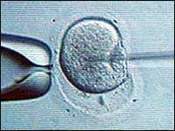 IVF pregnancy rate data has previously been reported on in our blog series: average per cycle IVF pregnancy rate and IVF age dependent pregnancy rates. We also provide a comprehensive overview of IVF risk and benefits.
IVF data used in our series is from the latest available national statistics complied by the US Center for Disease Control (2006 Assisted Reproductive Technology (ART) Annual Report).
Cost of IVF And Pregnancy Rate
The average pregnancy rate per cycle of IVF in 2006 was 35%. The average cost for a cycle of IVF is $9-12,000.
Pregnancy Rates After Tubal Surgery
In 2008, the American Society for Reproductive Medicine (ASRM) published a review on the benefits of tubal surgery for infertility treatment. In this review, the infertility experts of ASRM support the use of tubal surgery as a treatment for infertility when the fallopian tubes are blocked.
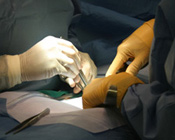 ASRM identified the best candidates for tubal surgery as those who have tubal ligations or those with tubal blockage at a single point in the tube (either proximal blockage or distal blockage, ie hydrosalpinx). The ASRM also identified women younger than 35 as the more ideal candidates for tubal surgery; however, they also admit many social, religious, and economic factors may make tubal surgery a suitable option for women over the age of 35.
Pregnancy Rates And Tubal Disease
The ASRM states that tubal reversal pregnancy rates after tubal surgery range from 10-80%.
They group patients into two categories:
tubal surgery for tubal disease
tubal surgery for tubal ligation reversal
Tubal Surgery and Pregnancy Rates: Tubal Disease
Pregnancy rates for women who have tubal surgery for diseased fallopian tubes range between 10-and 60%. Diseased tubes are tubes which have closed as a result of scar tissue from a previous pelvic infection. Pregnancy rates after tubal surgery are dependent on the severity of scar tissue in the fallopian tube.
We have previously published on the risk and benefits of tubal surgery, as well as provide a comprehensive overview on how to schedule tubal surgery.
Pregnancy Rates After Tubal Surgery for….
Mild Tubal Disease | 5-8% chance of pregnancy each month.
Severe Tubal Disease | 1% chance of pregnancy each month.
Tubal Surgery and Pregnancy Rates After Sterilization Reversal
Pregnancy rates for women who have tubal reversal surgery are between 40-80%. After tubal surgery for reversal of tubal ligation, women have between 8-10% chance of becoming pregnant each month. Our 2007 Pregnancy Study Report has comprehensive statistics about the pregnancy rate after tubal ligation reversal.
Tubal Surgery or IVF ?
This is a very personal and serious decision a couple with infertility will have to make. Many times the decision is based on both cost and chance of success. Often the number of additional children, as well as, social and religious concerns will also influence the choice of treatment.
If one looks at just cost and chance of success:
IVF | 35% chance of success each attempt. Cylce cost range from $9-12,000 per each try.
Tubal Surgery for Diseased Tubes | 1-8% chance of success each month after surgery. Tubal surgery at our center $5,400-$5,900.
Tubal Surgery for Sterilization Reversal | 8-10% chance of success each month after surgery. Tubal surgery at our center $5,400-$5,900.