






Chapel Hill Tubal Reversal Center
109 Conner Drive Suite 2200, Chapel Hill, NC 27514 (919) 968-4656

Tubal Reversal Blog ‘screening laparoscopy’

Operative Reports Before Ligation Reversal Surgery

May 24th, 2008

Undergoing a tubal ligation reversal at Chapel Hill Tubal Reversal Center is an important endeavor and we want to maximize every patient’s chance of ligation reversal success. Operative reports are important because they allow us to determine the likely success of tubal ligation reversal surgery.

When a surgeon performs an operation on a patient they are required to keep a written record describing the entire procedure. This is an important part of patient care and many hospitals provide transcription services to assist with creating operative reports. After surgery is completed, the physician will dictate an operative report. Operative reports contain the pre-operative diagnosis, post operative diagnosis, operative procedure, surgeon’s name, findings of the surgery, and what was done during the surgery.

There are two types of operative reports: vague and detailed.

A vague operative report gives generalized information regarding your surgery. Such a report might read, for example, “The tubes were tied in a standard fashion”, or “The tubes were burned in 3 separate areas,” or “A segment of each tube was removed.” These vague reports leave much to the imagination because there is no recognized ’standard fashion’ and we do not really know how far apart ’separate’ burns are.

A detailed operative report will give very specific and easy to understand information regarding your tubal sterilization. Such a detailed report might read, for example, “The tubes were tied in the isthmic (middle) section and a 2 cm interval segment was removed.” or ” The tubes were cauterized (burned) in 3 adjacent areas in the isthmic portion.” These reports give very specific information about what was done and where it happened.

There is no substitute for a detailed operative report. A good operative report can give us enough information to formulate what the likely success of any reversal procedure will be. In general, we can give ligation reversal success based upon the type of ligation a patient has had. If an operative report is ominous, then this allows us to advise patients to consider either a screening laparoscopy or in vitro fertilization (IVF) before attempting ligation reversal. This can prevent having an operation that would have a limited chance of success.

If an operative report can not be obtained then consideration should be given to having a screening laparoscopy. Patients should also be aware that most tubal ligation procedures can be reversed and only a small minority of ligation procedures can not be reversed.

Patients with any questions regarding operative reports, tubal ligation reversal, or tubal reversal success rates should contact a nurse at Chapel Hill Tubal Ligation Reversal Center.

Frequently asked questions regarding operative reports

What is an operative report?

An operative report is a typed report describing exactly what the doctor saw and did during your tubal ligation procedure.

Where can tubal ligation operative reports be obtained?

Tubal ligation operative reports can be obtained from the hospital or health care facility where you had your tubal ligation surgery. Your doctor may have a copy of your operative report in their office. The hospital will have a copy of the report in your hospital record and will keep them on file for a limited time.

How long does the hospital keep my operative report?

The time a health care facility will keep records will vary by state. Most states have laws specifying how long records must be kept. If a state does not have laws regarding keeping medical records, then the state medical board will have guidelines which the board encourages physicians to follow. North Carolina, for instance, has no state laws mandating how long medical records will be kept. The North Carolina State Medical Boards recommends physicians keep records for a minimum of 10 years. Medicare and Medicaid records are recommended to be kept for a minimum of five years.

The physician’s office or hospital will typically keep records in their file room for a limited time and then transfer the files to another storage area for several years. Some facilities will create digital records of your health care information and store this information indefinitely.

How can I obtain an operative report?

Contact the medical records department of the hospital where your tubal ligation was performed. You will have to fill out a medical records release form. The operative report can be mailed or faxed to you and to our facility. Please be aware some medical facilities are very busy and have limited medical record personnel. This means they may take some time to send records and you might have to keep a close watch to make sure the records are actually sent in a timely fashion. Chapel Hill Tubal Reversal Center has instructions and  a form you can use to obtain a copy of your operative report.

What happens if I can not get my operative report?

If you can not get your operative report you can try to get your doctor to give you more information about the type of ligation surgery you had. Although this is not as accurate as an operative report, this can provide some information. Many doctors will do their tubal ligation surgeries the same way over many years and they should be able to tell you how your procedure was done.

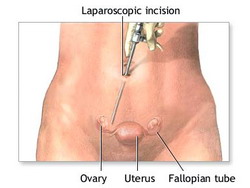
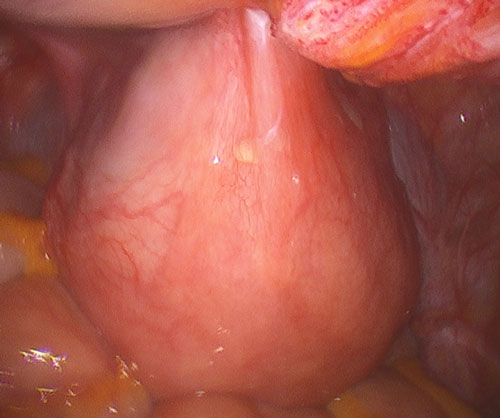
Your best option is to consider a screening laparoscopy. This involves placing a small telescope under your umbilicus (belly button) and looking at the fallopian tubes. This provide quick and accurate information about the condition of your fallopian tubes. When the screening laparoscopy is performed here, we proceed immediately with the tubal repair. If the laparoscopy shows that the tubes cannot be repaired, the procedure is ended without the laparotomy incision and a partial refund is given to the patient.

Will Chapel Hill Tubal Reversal do my reversal surgery if I do not have an operative report?

Yes. We frequently encounter many patients who are unable to obtain their operative report. The choice of whether to start with screening laparoscopy is up to the individual patient. Since most tubal ligation procedures are reversible, it is an option, and not a requirement.

We Wondered if Tubal Reversal Would be Possible

May 22nd, 2008

Dr. Monteith’s Diary – May 22, 2008

One of our 4 tubal reversal patients today had the following story.

She was from North Carolina and had three older children. She had her tubes tied several years ago. As time passed, she changed her mind and desired more children. She wanted a tubal ligation reversal and after searching the internet for the best tubal reversal doctor, she found out about Dr. Berger and she came to Chapel Hill Tubal Reversal Center to get her tubes untied.

Prior to her surgery, we reviewed her operative and pathology reports from her tubal ligation surgery, as we do with all patients. There was a shocking finding in her doctor’s description of her tubal ligation. Her doctor described removing 8 cm of fallopian tube on both sides! The fallopian tubes are normally about 10 cm in total length, and if 8cm of tube had been removed, there would be very little tube left to repair. Her pathology report, however, stated two separate 2 cm of tube lengths were the lengths of tubal segments sent to the pathologist for examination.

If the doctor really did remove 8cm of tube, then it might not be possible to repair her tubes successfully. If the pathology report was correct, then she should have good lengths left to reapproximate. Perhaps the pathology report was correct and the doctor did remove 2cm of fallopian tube but cauterized (burned) the rest. We were not sure. We had a dilemma.

Dr. Berger had initially recommended treatment by IVF. She did not want to do this, so the recommendation was made to start her operation with a screening laparoscopy . We were concerned if we proceeded straight to ligation reversal surgery, she may not have good fallopian tubes and she would have gone through an unnecessary operation.

The patient had a different plan. She declined both IVF and screening laparoscopy. Her desire was to have a tubal reversal no matter what. She reasoned if it was not meant to be – then it would not be. She was well informed regarding the possibility of us not being able to repair either fallopian tube. She wanted us to try to work with what she had. Her thinking was that any chance is better than no chance.

As tubal ligation reversal experts we were well aware of the possibility that this approach might lead to disappointment and unnecessary surgery and cost to the patient. We always want to maximize everyone’s chance of success. We never want a patient to undergo an unsuccessful operation. On the other hand, we recognize each patient is a unique person – a person with dreams and desires.

Our patients are well informed and understand the risks and potentially benefits of their treatment options. We do one thing very, very well at Chapel Hill Tubal Reversal Center: reversal of tubal ligation. The second thing we do well is allowing patients to make their own decisions regarding their health care. We do this by giving them the most complete and accurate information about tubal reversal surgery. We rarely say ‘No’ to patients who want to have their tubes untied.

There are some occasions where we may decline to perform surgery – if we believe that operating might be harmful or not have a possibility of being able to repair the fallopian tubes. We do realize a successful ligation reversal is important; however, equally as important, is a patient’s desire to try. For many of our patients the only thing worse than not having a successful ligaton reversal is not ever having tried.

This patient was the first patient of the day. We started the surgery with some fear that we might not see any fallopian tubes. Upon entry into the abdomen we did see good tube lengths and her repair went extremely well! She had a good surgical result and her total tubal lengths were about 4-5 cms on both sides.

We ended the surgery happy and content. As it turned out, this patient knew what she wanted and had confidence that it would work out. In the end, we were glad we did her reversal, allowing her make the decision that seemed right to her, and we were very glad that she was right!

Submitted by Dr. Charles Monteith

Diagnostic Laparoscopy Before Tubal Reversal: A Recap

January 12th, 2008

Why Some Patients Choose To Have Screening Laparoscopy

Tubal ligation procedures vary in the severity of injury occurring to the fallopian tubes. Although most tubal ligations are reversible, there are some cases where tubal reversal is not possible. If the operative report from your tubal ligation indicates there may be a problem in repairing the remaining tubal segments, or if you cannot get a copy of your operative report, you may be interested in the screening laparoscopy option offered at Chapel Hill Tubal Reversal Center.

Diagnostic laparoscopy is useful in some cases prior to having a tubal reversal procedure.With this option, your surgery begins with diagnostic laparoscopy to examine your fallopian tubes. If tubal repair is possible, tubal reversal is performed immediately while you are under anesthesia. That way you do not have to undergo anesthesia and surgery on two separate occasions.

If tubal reversal is not possible, the operation is concluded with just the diagnostic laparoscopy. There is an additional charge of $1000 to add the screening laparoscopy, but with this option you will receive almost half of the total surgery fee in refund should tubal repair not be performed. The “laparoscopy package” is excellent insurance in situations when the method of tubal ligation is unknown.

Screening laparoscopy is available to patients with a Body Mass Index (BMI) under 30 who are interested in more assurance regarding the outcome of the reversal surgery. It is recommended – but not required – in cases where the amount of tube remaining is questionable, such as after monopolar tubal coagulation at multiple sites along the tube.

If you have questions about the laparoscopy option, you can discuss them with Dr. Berger and the Tubal Reversal nurses during your preoperative consultation.

Laparoscopy Before Tubal Ligation Reversal

December 14th, 2007

Tubal Ligation Operations Vary

Tubal ligation operations vary in the amount of damage they cause to the fallopian tubes. Tubal coagulation (cauterization) tends to damage more of the tube than tubal ligation and resection or tubal clips/rings. Burning or cauterizing the fallopian tubes with a monopolar coagulator is more destructive than with a bipolar coagulator. With either type of coagulator, the more times the tube is burned, the greater the amount of damage that occurs.

How Much Fallopian Tube Remains After a Tubal Ligation?

The remaining amount and condition of the fallopian tubes after tubal ligation procedures varies a great deal. A patient’s tubal ligation operative report will give an indication about the remaining tubal segments that can be repaired by a tubal reversal procedure. When available, Dr. Berger always reviews the operative reports that are sent by patients to estimate the likely outcome from a tubal reversal operation.

In most cases, the tubal ligation operative report (and a pathology report if available) will help to determine if tubal reversal is possible. Until the time of surgery, the actual condition of the fallopian tubes remains unknown. This is partly because doctors differ in how they perform tubal ligation operations. With tubal coagulation procedures, for example, the coagulator can be used at different power settings and applied for varying lengths of time to the fallopian tubes. These details usually are not specified in an operative report.

Examining the Fallopian Tubes by Laparoscopy

Laparoscopy can be performed before tubal reversal to assess the condition of the fallopian tubes. Laparoscopy is a surgical procedure that permits viewing the fallopian tubes through a narrow telescope placed through a small incision below the belly button into the abdominal cavity. Laparoscopy can be performed for patients who want to be assured that tubal reversal is possible.

Laparoscopy is recommended in cases where the amount of tube remaining is questionable, such as after monopolar coagulation of multiple sites along the fallopian tube.

Dr. Berger performs laparoscopy under anesthesia and proceeds directly to tubal reversal, if examination shows the tubes are repairable. The patient is under anesthesia only one time. For safety reasons, screening laparoscopy is offered only to patients with a body mass index (BMI) of less than 30.

Screening Laparoscopy Cost

The additional charge for laparoscopy is $1000. If tubal reversal is not possible, the operation will end and you will receive a refund of close to 50% of the total surgery fee. The screening laparoscopy option is similar to an insurance policy. You purchase it and hope you never need it, but it is certainly nice if you do. Most patients do not elect to have the laparoscopic examination because of its additional cost and the knowledge that Dr. Berger can repair the fallopian tubes in 98% of cases, regardless of the method of tubal ligation.

More information on » screening laparoscopy

Special Report

Answers to seven important questions to find out if tubal reversal is right for you.

Telephone 919 968-4656 to speak with a Tubal Ligation Reversal Nurse

Call a Tubal Reversal Nurse
for a free consultation -

(919) 968-4656

Pregnancy Announcements | Latest Additions | FAQs | Press | MD News | Mission Statement | Privacy Policy | Doctors Directory | Site Map


http://www.tubal-reversal.net/includes/footer.php  was last modified on June 29th, 2009 04:35:17

109 Conner Drive Suite 2200, Chapel Hill, NC 27514 (919) 968-4656