







Chapel Hill Tubal Reversal Center
109 Conner Drive Suite 2200, Chapel Hill, NC 27514 (919) 968-4656

Tubal Reversal Blog ‘tubal reversal doctor’

Pregnancy After Tubal Reversal: Dr. Monteith’s First Tubal Baby

April 8th, 2009

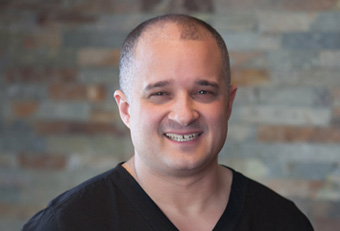
The-first-monteith-tubal-reversal-baby-shirt-is-being-mailed-to-alaskaThe staff of Chapel Hill Tubal Reversal Center is pleased to announce the arrival of Dr. Monteith’s first tubal ligation reversal baby.

The first Monteith Miracle T-Shirt was mailed to Alaska the first week of April. The pregnancies assisted by Dr. Monteith are beginning to roll in and the ‘Montieth Miracle’ t-shirts are starting to roll out.
Read the rest of this article and comment on it. »

A Man With a Mission: An Interview with America’s Leading Tubal Reversal Surgeon

July 14th, 2008

By Lisa D. Hourmouzis, RN
Tubal Reversal Nurse

It’s 7:30 am at Chapel Hill Surgical Center. In a moment of solitude, Dr. Gary Berger meticulously scrubs for the first surgery of the day. As he stands there quietly, I can’t help to wonder about the story behind the man in the surgical mask.

How did he become the surgeon he is today? What drives him to succeed?

These questions led to the following sit down with America’s leading tubal reversal surgeon, Dr. Gary Berger:

When did you decide to go into obstetrics and gynecology?
GB – When I was beginning my fourth year of medical school, during the time when we had to decide what direction we were going to go in, I felt like I wasn’t really secure enough in my basic medical foundation to want to jump into a specialty. So, I made the decision I would take a year of internship in internal medicine. But I had already made the decision that year to start my OB/GYN residency after the internship in medicine.

What led you to Duke?
GB – I was always a very hard worker. I guess I believed in the adage, “No pain, no gain.” So, I picked the hardest program in the US which was the medical internship at Duke University Medical Center. They had that reputation at the time. You were on-call five nights out of seven, and it was a very grueling program. But I thought I needed that to feel like I had a basic medical education before I proceeded.

Did anyone influence your decision to enter OB/GYN?
GB – I had been thinking about going into obstetrics and gynecology, and it just so happened that during that time we had a visit from Dr. Carl Tyler from the Centers for Disease Control. He was looking to recruit physicians into the EIS program, the Epidemic Intelligence Service. He came to the University of Rochester where I attended medical school and made contact with one of the pediatric professors there. I remember being on my pediatric rotation at that time.

Unbeknown to me, my pediatrics  professor had been an EIS officer; he also taught the courses in epidemiology and statistics, which I loved. Most of the other medical students weren’t so interested in them. Because I had done so well in those courses, he recommended that Dr. Tyler interview me. That was definitely a turning point in my life.

I was offered the opportunity to be in the U.S. Public Health Service at the CDC, but Dr. Tyler needed me to complete one year of my OB/GYN residency before I could join the program. That made my decision. I immediately started looking for residencies in OB/GYN.  And as it turned out, that two-year period was probably one of the most influential periods in my life. It was an absolute amazing experience.

What did you like most about obstetrics and gynecology?
GB – The thing I liked about obstetrics and gynecology was the obstetrics. I really did not think I would ever have an interest in performing surgery. In medical school, my surgical rotation was one of my least favorites.

What changed your view about surgery?
GB – During my third and fourth year of my OB/GYN residency, I had the good fortune of working closely with Dr. Jerry Hulka, the inventor of the Hulka clip. He made a big impression on me. His interests, aside from developing this technique in sterilization, were laparoscopic surgery and tubal surgery. So, it was during that time I became interested in tubal surgery; and what really solidified it was when I had the chance to see microsurgery performed. I knew at that point, that’s what I wanted to do.

Why did you decide to focus on tubal reversal surgery?
GB – My ideal was always to be able to do this surgery. I’ve done infertility treatment, IVF. I’ve done almost every type of GYN operation there is, with the exception of cancer surgery, but tubal microsurgery was always my special love. Fortunately, that’s where I am at this point.

What drives you?
GB – I think it’s a desire to be successful at whatever I do. If I’m doing tubal surgery, I want to be the best at doing tubal surgery. I want to know the most about it, have done the most and not just have the most experience, but intellectually, collected the most information. To me, that’s enjoyable because then I feel like it’s something that I’ve mastered. And of course, I like being able to help the couples that come here. I really feel that we can help most people. I know that  people are better off coming here than taking any other alternative that they have, in terms of having tubal reversal surgery.

What do you enjoy most about tubal reversal surgery?
GB – I like the challenge, the meticulousness about it. And I like being able to operate on patients and see them be comfortable and safe, and not dealing with complications.

I have a very idealistic view of things. If there’s a better way to do something, let’s find it and do it that way. I just think that’s a good way to practice medicine. But it’s not just about me personally; it has to do with everyone on our staff  who is involved in it.

Where do you hope to see tubal reversal surgery in the future?
GB – I don’t know if the pendulum will ever swing back to tubal reversal, it was there when I started 30 years ago. It was the new, exciting thing. And then IVF became the new and exciting thing.

Tubal surgery is quite different. I don’t think tubal surgery will ever suddenly become widely used or widely taught, but I think there is clearly a place for it. I like the fact that I’m training another doctor. And maybe in the future, one thing we might consider is becoming a training center where we could take physicians who are already at an advanced level like Dr. Monteith, and help them be able to do this type of surgery with expertise.

Tubal reversal helps a lot of patients, and there definitely should be the option for doctors to have additional education in it so that doctors don’t automatically send their patients into IVF programs when a simple tubal operation could be the solution.

Do you have a philosophy in your professional life?
GB – There’s an expression that I heard when I was in medical school, the quote was, “the secret in caring for the patient, is in caring for the patient.” And part of my philosophy is that I want to provide the exact type of medical care that I would want for myself, no less.

If I have to have a doctor, I want somebody who knows what they’re doing, is educated and a decent and kind person. Technically an expert, as knowledgeable about it as anyone, or more so than anybody else in the world. That’s the kind of doctor I would want for myself. Someone who will really take care of me if I have a problem and won’t brush it off or be too busy because it’s inconvenient for them. That’s the same thing that I want for my patients.

To learn more about Dr. Berger and Chapel Hill Tubal Reversal Center, call 919.968.4656 or contact one of our tubal reversal professionals today.

How to Get Tubes Untied: Reverse Tubal Ligation

April 26th, 2008

What is Reverse Tubal Ligation?

Reverse tubal ligation – or more properly, tubal ligation reversal – is a procedure to get tubes untied for women who desire a pregnancy after tubal ligation. There are actually several procedures that can be used to untie tubes after the tubes have been tied.

Techniques of Reverse Tubal Ligation

There are 3 main techniques that can be used for reversing tubal ligation.

  1. Tubal anastomosis
  2. Tubal implantation
  3. Salpingostomy (Fimbriectomy Reversal)

Tubal Anastomosis

Tubal Anastomosis
Microsurgical tubal anastomosis is the most common technique to untie tubes.
Tubal anastomosis is the best procedure to get tubes untied.

The most common method for untying tubes is the reverse tubal ligation procedure of tubal anastomosis. Anastomosis refers to joining two body parts, and tubotubal anastomosis is joining two tubal segments together. Most techniques that tie tubes result in two separate tubal segments, so the simplest way to get tubes untied in these cases is with the anastomosis procedure.

For more details about untying tubes via tubal anastomosis, see the topic on Tubal Reversal by Tubal Anastomosis on the Tubal Reversal Blog and the description of Microsurgical Tubal Anastomosis on the Chapel Hill Tubal Reversal Center website.

What is the Cost of Untying Tubes?

Reverse tubal ligation is usually described as extremely expensive, ranging from $10,000 to $30,000. The tubal anastomosis procedure to untie tubes costs $5900 at Chapel Hill Tubal Reversal Center. Because it is done as outpatient surgery and performed four times a day, the cost savings is passed on to the women who want kids after tubal ligation.

Watch Dr. Berger Untie Tubes

The tubal reversal operation by Dr. Berger has been featured on television – this video clip on YouTube is 3 minutes long. To watch the entire operation, you can order a free video or DVD of tubes untied.

Other Methods to Untie Tubes

Tubal implantation and salpingostomy are less frequent techniques to untie the tubes after a tubal ligation. For descriptions of these techniques, see the topic on Tubal Reversal by Tubal Implantation and Tubal Reversal by Salpingostomy on the Tubal Reversal Blog or Read the section on Reversal Illustrations on the Chapel Hill Tubal Reversal Center website.

Tubal Reversal by Tubouterine Anastomosis

December 22nd, 2007

Tubal Anastomosis at the Uterine Cornua

The uterine cornua is the area where the fallopian tube emerges from the uterus.Tubouterine anastomosis is a tubal reversal procedure that is intermediate between tubotubal anastomosis and tubouterine implantation. It is also called cornual anastomosis because the tube is joined to the cornual area of the uterus with this operation. The cornu is the area where the fallopian tube normally emerges from the the uterus.

When Is Tubouterine Anastomosis Performed?

Tubouterine anastomosis attaches a healthy segment of fallopian tube to the cornual area of the uterus.Tubouterine anastomosis is performed when there is a healthy tubal segment near the ovary, but no segment remains attached to the uterus, following a tubal ligation procedure. It is also performed when a tubal segment attached to the uterus is scarred and has no open lumen.

An incision is made into the uterus at the cornu to find the opening of the fallopian tube tube as it passes through the uterine muscle. If an opening is found, the tubal segment that remains is rejoined to the uterus at this site.

Case Histories

The topic of tubouterine anastomosis is a timely one. During the past week, 2 patients undergoing tubal reversal surgery at Chapel Hill Tubal Reversal Center required this operative procedure. In one case, each fallopian tube had been coagulated or burned next to the uterine cornu, leaving no segment attached to the uterus. The other patient had developed the condition known as salpingitis isthmica nodosa in the portion of the fallopian tube between the uterus and the a Falope ring. In both cases, tubal reversal was able to performed with the technique of tubouterine anastomosis.

Dr. Berger’s Comment

Frequently, patients have been informed by doctors who are not specialists in tubal ligation reversal that their fallopian tubes cannot be repaired after a tubal ligation. This is especially true when the proximal segments of the fallopian tubes are missing or diseased. But there are a variety of surgical techniques that can be used during tubal reversal surgery by a doctor who is an experienced tubal reversal surgeon. This is one of the advantages patients have when they come to Chapel Hill Tubal Reversal Center for their tubal reversal procedures.

Is Tubal Reversal The Best Option For You?

December 11th, 2007

If you have had your tubes tied and would like to become pregnant again, tubal reversal surgery is probably the best option for you. Tubal ligation reversal is the most successful and cost-effective way to become pregnant for 98% of women who have had a tubal ligation and now want to have another baby.

What Is Your Age?

The natural fertility rate declines with age. Pregnancy rates after tubal reversal, therefore, are highest for younger women.  Although pregnancy rates are lower for older women, you can still become pregnant after age 40 if you are ovulating and have periods.

Dr. Berger has kept detailed records of his patients and has compiled a comprehensive follow-up study on pregnancy after tubal reversal for all of his patients. His patients under 30 have a 77% pregnancy rate after having a tubal reversal procedure. The pregnancy rate is 72% for women ages 30-34 , 62% for women 35-39, and 34% for those 40 years of age and older after tubal reversal surgery performed by Dr. Berger.

What Type of Tubal Ligation Did You Have?

There are several ways that a doctor can tie a woman’s fallopian tubes. Women with the ring or clip method of tubal ligation have a 74% pregnancy rate after undergoing tubal reversal surgery. Women with the tubal coagulation technique have a 65% pregnancy rate, while women with tubal ligation and resection methods have a 62% probability for pregnancy after reversal surgery.

If you aren’t sure what type of tubal ligation you had, don’t worry! You can get a copy of your operative and pathology reports relating to your tubal ligation, and fax them to Chapel Hill Tubal Reversal Center at (919) 967-8637. Please attach the Fax Cover Sheet so we can reach you when your records arrive. Dr. Berger will review the operative report at no charge and we will contact you regarding possible outcomes for you following reversal surgery.

How To Choose The Best Tubal Reversal Doctor?

The most important question to ask is how many tubal reversal surgeries the doctor has performed. The more experience the doctor has, the better your outcome will be. Dr. Berger has the most experience with this operative procedure of any reproductive surgeon in the world and has performed more than 6,000 tubal reversals! He is considered by other medical professionals in the US and abroad to be the best tubal reversal doctor.

Also ask if the doctor performs tubal reversals on an outpatient basis. Outpatient tubal reversal reduces cost and avoids the risks of hospitalization, such as infection with hospital-acquired bacteria. Chapel Hill Tubal Reversal Center is the only center worldwide that is dedicated exclusively to outpatient tubal ligation reversal, and Dr. Berger is the only doctor who specializes in and limits his practice to outpatient tubal reversal surgery.

Julia Smith, RN is the Nurse Adminstrator of Chapel Hill Tubal Reversal Center.I Will Be Happy To Assist You

If you would like additional information or would like to schedule your tubal reversal procedure, please feel free to contact me. You can reach me from 8 am to 8 pm Eastern Time at (919) 656-8204 or by e-mail at JuliaS@tubal-reversal.net. I will be glad to answer any questions you might have!


Submitted by Julia Smith, RN
Nurse Administrator

Why Tubal Reversal Part 2

November 25th, 2007

About Me

Dr. Berger is the tubal reversal doctor with the most experience and babies born worldwide.Sometimes patients ask about my background and why I became a tubal reversal doctor. (It’s a fair question, since I ask them what made them decide to have a tubal reversal.) I usually tell them about my first year after medical school when I was an intern in medicine at Duke University Hospital taking care of critically ill and dying patients. That is when I decided to devote my medical career to assisting with the beginning of life rather than its ending.

Influential Teachers

The first tubal surgery that I assisted in was during my first year of residency in obstetrics and gynecology at Johns Hopkins Hospital in 1970. At the University of North Carolina where I completed my residency, Dr. Jaroslav Hulka (the inventor of the Hulka clip) taught me the basic principles of tubal reversal surgery. In 1976, I went to Europe to learn tubal microsurgery from Dr. Robert Winston. Dr. Winston’s microsurgical method was an advancement but also a major operation of several hours duration resulting in hospitalization for 5 days or more.

My goal was to make tubal reversal easier to undergo and less costly for the patient. This was accomplished by combining the best principles of gyn surgery, microsurgery, and plastic surgery techniques. I had the great fortune of operating for many years with the renowned plastic surgeon, Dr. Erle Peacock, author of the surgical text entitled “Wound Healing”.

Outpatient Tubal Reversal

By the mid-1980s, I developed the outpatient surgical approach to tubal ligation reversal that I use – and continue to improve upon – to this day. What was a major and expensive in-hospital operation with prolonged recovery became a comfortable outpatient procedure that is affordable for most couples. It is the most gentle operation that exists for restoring tubal anatomy and has resulted in the birth of more babies in the world than any other tubal reconstructive operation.

Anyone who is interested in seeing how I perform outpatient tubal ligation reversal can watch the entire operation that was recorded on video and shown on Discovery and TLC. In this video, each step of the procedure is described as it is performed.

My Viewpoint

I have been fortunate to have had the best teachers in the world in the art of surgical technique as it applies to the fallopian tube. Specializing in tubal reversal surgery over the past 30 years has allowed me to assist more than 6000 couples in the beginning of life with the safest, most comfortable, and most successful tubal reversal operation.

More information on » tubal reversal doctor

Special Report

Answers to seven important questions to find out if tubal reversal is right for you.

Telephone 919 968-4656 to speak with a Tubal Ligation Reversal Nurse

Call a Tubal Reversal Nurse
for a free consultation -

(919) 968-4656

Pregnancy Announcements | Latest Additions | FAQs | Press | MD News | Mission Statement | Privacy Policy | Doctors Directory | Site Map


http://www.tubal-reversal.net/includes/footer.php  was last modified on November 1st, 2009 18:15:35

Chapel Hill Tubal Reversal Center.
109 Conner Drive Suite 2200, Chapel Hill, NC 27514
Tel: (919) 968-4656     Fax: (919) 869-1976