






Chapel Hill Tubal Reversal Center
109 Conner Drive Suite 2200, Chapel Hill, NC 27514 (919) 968-4656

Tubal Reversal Blog ‘tubal reversals’

Tubal Ligation Reversal And Age: Patricia 46

July 22nd, 2009

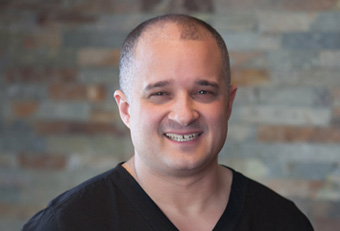
Patricia-stands-with-Dr.-Monteith-her-tubal-reversal-surgeonPatricia is 46 years old, a mother of three children, and traveled to Chapel Hill Tubal Reversal Center from Mooresville, North Carolina (N.C.) for tubal ligation reversal. She is not only a mother, but also a designer, inventor, and marketer who created and developed a sports ball to improve the lives of young children. When Patricia had her last c-section twenty-two years ago, she had her tubes tied. She has regretted her decision ever since. Read the rest of this article and comment on it. »

After Tubal Reversal: Risks In Late Pregnancy

June 30th, 2009

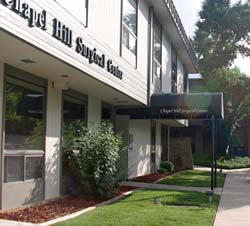
Chapel-Hill-Surgical-Center-a-surgical-facility-devoted-to-tubal-surgeryThis is the second article focusing on the risk of pregnancy in older women. This article focuses on the risks of later pregnancy.

Many patients of Chapel Hill Tubal Reversal Center are over 40 years of age and they often ask about the risk of pregnancy in older women.

This series is intended to provide comprehensive information to women who desire pregnancy after tubal reversal surgery.

Read the rest of this article and comment on it. »

Tube Blocked: Dorinda and Blocked Tubes

December 22nd, 2008

The tubal reversal doctors at Chapel Hill Tubal Reversal Center perform over 800 tubal ligation reversals every year. We perform tubal reversals on patients from all over the United States and across the world. We have become experts in unblocking blocked tubes.

blocked-tubes-and-tubal-rev

Every one of our patients brings with them a unique story. Periodically, we like to present their stories so readers can see the diverse walks of life from which our patients come.

On December 1st 2008, I meet Dorinda and asked her if she would participate in our Tubal Reversal Blog. She agreed and here is her story:

Read the rest of this article and comment on it. »

Tubal Ligation and Tubal Ligation Reversal

November 13th, 2008

Tubal ligation is a surgical procedure that blocks the fallopian tubes to prevent pregnancy. Many people commonly refer to tubal sterilization as having their ‘tubes tied’. The more correct medical term is tubal occlusion (occluding or closing the tube), because not every fallopian tube is ligated or tied when it is closed. There are many different ways to perform a tubal ligation, but all the procedures cause some destruction of the fallopian tubes. There are many ways to perform a tubal ligation: tying and cutting, cauterizing (burning) and clipping or banding the fallopian tubes are the most common techniques.

Read the rest of this article and comment on it. »

Meet Andrea…

October 9th, 2008

My name is Andrea, and I’m a 31 year-old home schooling mother to four children.

I’m married to my partner in Christ, Jeff, who is 36. Jeff has his own CPA practice here near our home. We live in beautiful Coeur d’ Alene Idaho, where we are a very close knit Christian family.

In 2005, against the advice of my doctor and with my husband cautioning against it, I had a Filshie clip tubal ligation at the planned c-section birth of my daughter. My doctor used clips because of my age at the time of tubal ligation, as well as the fact that he believed I would want more kids based on my nature.

Soon after the birth of my daughter, I began experiencing symptoms that independently wouldn’t have been alarming, but when gathered together, had me very worried and feeling terrible. Early after the birth, I felt very sad about not having more children. At times I thought the symptoms were just because I was sad about ending my fertility. Now I know they are separate, as well as the desire to continue to have more children, even if you already have “more than normal”, is a God given desire, and NOT something BAD.As my symptoms began to mount, I began a journal of NEW symptoms for me. While one or two of these may not be abnormal, each one of these was new for me, and together made a host of symptoms.

· Period returned 3 weeks after post-partum bleeding, despite breastfeeding full time.    The earliest I had a period while breastfeeding before was 8 months!

· Cyclical migraines or cluster headaches. Typically, one in the week before my period, one upon my period leaving, and one mid-cycle. Each took up to 4 days to clear completely, and each required prescription medication. Nausea and vomiting would accompany without treatment.

· First time I couldn’t lose my baby weight through breastfeeding, diet and exercise.

· Highly emotional, and easily brought to tears or sadness.

· Extremely dry skin.

· Mid-cycle cramping and breast tenderness.

· Terrible cramping for 1-2 days of menstruation, with moderate cramping before bleeding starts, with light cramping entire period. I’m a very active woman with high pain tolerance. This cramping was enough to nearly bring me to tears.

· Bleeding so severely, I would soak a pad in an hour. My doctor suspected menstrual anemia.

· Bleeding sometimes mid-cycle. Spotting would begin on CD 23-24 and continue through 28 when heavy period would start. Bleeding would last 7 full days, with spotting another 2-3 at the end.

· Persistent yeast infections, presumably from being “damp” due to having to wear pads much of the month to catch unexpected flow.

When looking at this journal, I sought the advice of my OB/Gyn and family physician. Both doctors acknowledged tubal ligation can and often does cause painful and heavy periods. However, my family physician went a step further. She conveyed that she had heard numerous cases of women having severe problems following tubal ligation, and was fully on board in my seeking a reversal. She did hormone screening and other blood work, and my OB/Gyn performed a pelvic ultrasound to rule out endometriosis, infections, fibroids, cancers and cysts. Both doctors gave me a clean bill of health, with no other cause for my new problems. Both doctors wrote to my insurance company, requesting payment for a tubal reversal on the sole basis of Post Tubal Ligation Syndrome (PTLS).

The insurance company, a national and well-known provider, wrote back these words:

“Although a tubal ligation reversal is medically necessary for the health of the insured, tubal reversals are not covered as the code falls under fertility treatment which is excluded. *Named insurance company* will authorize payment for treatments of hormone therapy, ablation, D&C and hysterectomy.”

Obviously, at 29 years old and also seriously mourning the loss of my fertility, these were not acceptable treatments for the physical manifestations of my tubal ligation.

We began the process of searching out the best doctor to perform a tubal ligation reversal, and saving the funds to do so. Some local physician’s, including my own, perform tubal ligation reversal. However, I was unable to feel satisfied about the outcome since none maintained accurate PTLS relief and pregnancy statistics based on their own work. Doctor’s in the Seattle area also do tubal ligation reversal, as well as many other cities in the nation. The local doctor’s were going to cost us about $12,000. Even with travel from Northern Idaho, Chapel Hill Tubal Reversal Center was a more affordable, and a more highly skilled facility.

Post Tubal Ligation Syndrome Series

This is the ninth article in our fourteen part series on PTLS and associated medical conditions. The first article, Pain After Tubes Tied: A Symptom of Post Tubal Ligation Syndrome?, introduces the most common symptoms some women attribute to their tubal ligation.

Readers can also read Andrea’s after surgery follow-up story: Andrea After Tubal Ligation Reversal Surgery. In addition to telling us how she has done after her tubal ligation reversal, she also has some exciting news to share!

Our next several articles will present personal stories of some of our patients who have suffered from worsening menstrual, physical, and emotional symptoms after surgical sterilization procedures ( women who had their tubes tied).

We invite readers to join our Tubal Reversal Message board and discuss and share personal experiences with tubal ligation. We also have a dedicated PTLS forum for readers to share experiences of worsening symptoms after tubal ligation procedures.

Is Your Doctor Cold on the Idea of Tubal Reversal?

May 26th, 2008

Submitted by Dr. Monteith
Chapel Hill Tubal Reversal Center

Many doctors will give you less than a warm response when you ask about tubal ligation reversal. Ever wonder why?

I would like to use myself as an example. I started my obstetrics and gynecology (ob/gyn) residency in July 1997 and finished in June 2001. I never saw a single tubal reversal operation performed at the university where I trained. Not one. I saw many unusual and rare things, but I never saw a tubal ligation reversal. I am not alone. Many other doctors would probably tell you the same thing if you asked them.

Lack of Familiarity or Training

Most doctors- especially those who have trained within the last 15 years – are unfamiliar with tubal ligation reversal. The reason is simple. Ligation reversal is considered elective surgery. As a result, these procedures are rarely done in hospitals. Therefore, doctors in training get little or no exposure to these surgical procedures. Because of this, most doctors have little knowledge about these types of operations.

Sometimes doctors in training will reason that if they never saw a particular operation, the surgery does not exist because it is not beneficial and may even be harmful. Of course, this is faulty reasoning.

I would have never thought ligation reversal is an effective surgery if it were not for a three minute experience I had when I was a second year resident doing my reproductive endocrinology rotation.

I was with a physician who was the head of our reproductive endocrinology department. We were counseling a 38-year-old patient who was married, had a tubal ligation and wanted to become pregnant again. At the conclusion of her visit, she had asked what she should do? Since I had seen every patient with fallopian tube problems treated with in-vitro fertilization (IVF), I mumbled to myself, “We are going to recommend you get IVF.” Before I could finish my mumbled response, the director said, “I recommend you get a tubal ligation reversal.” My mouth dropped open! Why did we recommend an operation that we did not perform and one I had never seen? I remember exactly what he said next, “We can do this procedure for you. The cost of tubal reversal will be $15,000 here at the hospital. I recommend you talk with Dr. Gary Berger, a tubal reversal specialist who does them for considerably less cost.”

After the conversation, I asked him why we didn’t do tubal reversal procedures at our hospital. He responded, “Charles, we have to charge patients more for this surgery in the hospital. Since patients have to pay out of pocket, most people will be unable to afford the surgery with us. This is a great procedure for her because she will have the ability to get pregnant many times.”

“But isn’t the success rate less than 50 percent?”, I asked. He dropped his glasses down, looked over the rims and told me in a very direct voice, “No! In the best of hands, the success rate is 80 percent.” Somehow he seemed offended that I thought he had recommended a bad treatment.

This conversation happened in 1998. I filed this brief exchange in my memory and mostly forgot about it for the rest of my training.

Other Mistaken Ideas Doctors May Have

Many doctors might say a general ob/gyn resident would not see any of these surgeries while training, but a doctor in training as a reproductive endocrinologist would. Unfortunately, this is not true. I had two friends who trained to be reproductive endocrinology specialists. One did two tubal reversals over a three year period of training, the other did none.

It is unfortunate that my friends, who had little or no experience with reversal surgery, are going to be the same doctors who will counsel patients about it. No wonder they routinely recommend IVF – a treatment that they received almost exclusive training in during their fellowship programs.

Why I Came to Chapel Hill Tubal Reversal Center

I hope my personal experience can illustrate why general ob/gyn doctors may not support their patients who want to have their tubal ligations reversed, and why reproductive specialists mostly do IVF. I view tubal ligation reversal as a disappearing surgical skill that may not be available to patients in the future. This is why I asked to join Dr. Berger’s staff at Chapel Hill Tubal Reversal Center. To help women with tubal ligations who want to get pregnant is the reason why I have decided to embark on the path to become a tubal ligation reversal specialist.

Will Tubal Reversal Become a Lost Skill?

January 20th, 2008

Tubal reversal surgery is becoming a lost skill among doctors in training, according to an article in the January 2008 issue of Fertility and Sterility, the most influential medical journal for reproductive specialists. The article states, “The future for tubal anastomosis seems grim…and, like the Roman Empire, may be lost in Antiquity.”

The thesis of the article was that almost exclusive concentration on IVF and related reproductive technologies has decreased the training of reproductive specialists in tubal reparative surgery to repair tubal blockage.

“The success of surgical tubal anastomosis is directly linked to surgical experience. With the advent of ART, surgical training has markedly declined, and there remain few fellowship programs with meaningful numbers of surgical cases. One study reported that most of the current Reproductive Endocrinology and Infertility fellows performed less than 10 procedures and 35% of program graduates performed no surgical tubal reversals in the previous year.”

Chapel Hill Tubal Reversal Center is for Patient Care

Patients have occasionally asked me if, with the experience I have had performing tubal reversals, I was teaching other physicians to perform this kind of surgery. Since Chapel Hill Tubal Reversal Center is a private practice dedicated to patient care – not a training institution – I have not previously taught other physicians the skills acquired over the 30 years I have been practicing as a reproductive surgeon. Having residents or RE fellows coming here for brief periods would allow only an introduction to the techniques of tubal reparative surgery. This would be insufficient for them to acquire all of the skills necessary to perform tubal reversals.

Introducing Dr. Charles Monteith

Recently, Dr. Charles Monteith, an Assistant Professor of Obstetrics and Gynecology at the UNC School of Medicine, requested a mentoring relationship with me to learn the techniques of tubal reversal surgery. Dr. Monteith is a board certified obstetrician-gynecologist with 6 years of surgical experience subsequent to completing his residency at the UCSF Medical Center. He has begun assisting me in surgery and will continue to do so on selected dates during the next 6 months. Some of the patients who have come here since January 1st have already met him. With his prior surgical experience, and after an extended training period, Dr. Monteith will become certified as a Tubal Reversal Specialist and join our staff in July 2008.

Dr. Berger’s Comment

My response, therefore, to the Fertility and Sterility article is that tubal anastomosis will not become “lost in Antiquity”. Perhaps in the future, other physicians will follow the path that Dr. Monteith has chosen to learn the skills and techniques required for successful tubal reversal operations. More information about Dr. Monteith will be available in forthcoming blog posts and on the Chapel Hill Tubal Reversal Center website.

More information on » tubal reversals

Special Report

Answers to seven important questions to find out if tubal reversal is right for you.

Telephone 919 968-4656 to speak with a Tubal Ligation Reversal Nurse

Call a Tubal Reversal Nurse
for a free consultation -

(919) 968-4656

Pregnancy Announcements | Latest Additions | FAQs | Press | MD News | Mission Statement | Privacy Policy | Doctors Directory | Site Map


http://www.tubal-reversal.net/includes/footer.php  was last modified on November 1st, 2009 18:15:35

Chapel Hill Tubal Reversal Center.
109 Conner Drive Suite 2200, Chapel Hill, NC 27514
Tel: (919) 968-4656     Fax: (919) 869-1976