Search Results for: "tubal clip removed"
December 23, 2009 · No Comments
This is the personal story of Shaunda who seeks a natural pregnancy after an endometrial ablation. Her ablation procedure was done for treatment of anemia caused by heavy periods and fibroids. Shaunda underwent a successful tubal ligation reversal and is now prepared to take on the challenges of pregnancy after an ablation procedure.
Read More
December 22, 2009 · No Comments
Continuing advice on tubal reversal, pregnancy, and endometrial ablation is offered by the tubal reversal experts of A Personal Choice. The medical advice in this article focuses on women who have regular menstrual cycles after ablation.
Read More
November 08, 2009 · No Comments
Jamie and Kraig are two tubal reversal angels who have recently graced the staff of A Personal Choice. After the tragic death of their newborn, these angels sought the hope of restored fertility through the reversal of ‘permanent’ tubal sterilization. Within 4 months of the death of her newborn son and within 2 months after her tubal reversal, Jamie was pregnant again. Her due date is exactly the same date – 12 months from the day – that her son Kohl passed away.
Read More
July 14, 2009 · No Comments
Pat is a 47 year-old breast cancer survivor who has defied the odds and now travels to A Personal Choice to pursue her dreams of having a tubal reversal and giving herself the possibility of conceiving again.
Read More
December 31, 2008 · No Comments
The tubal reversal doctors at A Personal Choice perform tubal surgery as an alternative to in vitro fertilization (IVF) for treating infertility as well as for reversing sterilization. The advantages of tubal surgery compared with IVF are its higher pregnancy rate, lower cost, and the ability to become pregnant naturally and more than one time if so desired.
Read More
May 25, 2008 · No Comments
At A Personal Choice, we want to maximize the chances for pregnancy after tubal ligation reversal for all of our patients. One step that is helpful in planning for a tubal reversal procedure is examining the pathology report from a patient’s medical record. When a tubal ligation and resection procedure has been performed, a segment of fallopian tube was removed and most likely sent to a pathologist. Therefore, a pathology report should exist in the patient’s medical record. A pathology report will help our tubal reversal doctors determine exactly what was done during a ligation and resection procedure and what your chances of tubal reversal success will be.
Read More
May 10, 2008 · No Comments
Fishie Clip sterilization is one of the best tubal sterilization procedures to reverse since it causes minimal damage to the fallopian tubes. Women whose tubes have been ‘tied’ by Filshie clips have a 75% pregnancy rate at A Personal Choice.
Read More
December 16, 2007 · No Comments
Tubal Reversal Scholarly Publications Early Experimental Studies in Animals In 1969, David, Brackett and Garcia (1) reported using microsurgical techniques for uterotubal anastomosis after removing the uterotubal junction from one side in 25 rabbits. Among 11 (44%) of the animals that became pregnant, fewer implantations occurred on the operated side than on the unoperated side. […]
Read More
November 28, 2007 · No Comments
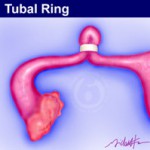
Tubal Ligation by Falope Ring and Hulka Clip The Falope ring and Hulka clip are occlusive methods of tubal ligation. They block the fallopian tubes, but no tubal segments are clamped, removed, or burned. The Falope ring is also referred to as the tubal ring or tubal band. It constricts a segment of the fallopian […]
Read More




 Birth Announcements
 Birth Announcements
 Birth Announcements
 Birth Announcements
 Birth Announcements
 Birth Announcements

