








Archive for the ‘why tubal reversal’ Category
Wednesday, April 30th, 2008
Dr. Montieth’s Diary on Becoming a Tubal Reversal Specialist
Today we had another successful day of untying tubes. We began the day at 7AM. Four patients were scheduled for tubal ligation reversal surgery.
I was able to first assist Dr. Berger in the first three surgeries of the day, but had to leave prior to the fourth surgery. I am becoming proficient at identifying tubal anatomy and repairing tubes that have been tied.
The first patient had her tubes tied several years ago and she was now in a new relationship. Both she and her partner desired more children. They made the decision that they would undergo tubal ligation reversal and try to pursue their dream of having children together. Her surgery went well and we were able to successfully reverse her tubal ligation.
The second patient was similar to the first and desired more children. Her surgery also went well.
The third patient had her tubes tied, but after her surgery she lost a child to Sudden Infant Death Syndrome (SIDS). We often hear stories like this from many patients who come to Chapel Hill Tubal Reversal Center. It is extremely sad to hear the stories these patients tell. My heart aches for them as they try to replace their children and add to their family. Every time I hear these stories I think of my own children and what it would be like to experience such a loss. I can not fully imagine the pain from such loss but I can understand the strong desire to replace a cherished soul. I am happy to report that her surgery went extremely well and she had an excellent operative result. I take enjoyment out of every reversal surgery I have participated in, and feel an extra sense of accomplishment when assisting in untying tubes for patients who have lost children unexpectedly.
I had to leave before the fourth patient had surgery. Fortunately, I will be back in the morning for four more reversal surgeries and to meet four more interesting people and learn about their stories.
Tags: Dr. Monteith, repairing tubes, reversal surgery, SIDS, surgery, tied, tubal anatomy, tubal ligation, tubal ligation reversal, tubal ligation reversal specialist, tubal ligation reversal surgery, tubes tied, untying tubes
Posted in Dr. Monteith, tubal reversal surgery, untie tubes, why tubal reversal | 13 Comments »
Tuesday, April 15th, 2008
My First Day at Nourishing Hopes and Dreams
My first day as a tubal ligation reversal specialist will always be remembered. I began my training with Dr. Berger during the first week of January 2008. We started the day off by meeting the patients who would be undergoing tubal ligation reversal at Chapel Hill Tubal Reversal Center.
I met four patients of different ages, backgrounds, and ethnicities . They were all very different people who all desired the same thing: reversal of their tubal ligation.
- The first patient was in her forties, she had emigrated from Ethiopia, her last child was more than twelve years ago, and she desired a chance to have another child.
- The second patient was in her thirties and her previous husband had died unexpectedly. She had children but her fiancé did not have any children. Together, they desired a child.
- The third patient,in her late twenties, had two children and a tubal ligation. Several years later she subsequently found a new partner and he desired a child with her. So while he was deployed overseas, she came for a tubal ligation and a chance for a new future when he returned from his military deployment.
- The fourth patient was in her late twenties and had several children. When she and her partner were in their early twenties they were financially maxed out and she had her tubes tied as an act of desperation. Several years later, she and her husband subsequently became financially stable and they wanted another child. They considered IVF but decided that a reversal was a better option for them. We also learned of an extremely sad story from this patient. She had a friend who had a tubal ligation. This friend had all of her four children die overnight in a house fire. This friend desperately has hope for a future reversal of her tubal ligation and was hoping to obtain a tubal reversal in the future.
All of the tubal reversal surgeries went well that day. The patients all did well and had technically excellent tubotubal reanastamosis (tubal ligation reversal) procedures. They all recovered well and went home to pursue their quest to add to their families.
For as long as a live, I will never be able to forget these women, their partners and the stories they told. I can never forget their quest to add children to their lives. For them I hope they attain what they desire.
My first lesson as a Tubal Reversal Specialist was that no one can predict the future, but if you always look hard enough you can always find a way - and someone to help- to correct prior mistakes.
Tags: Add new tag, child, children, dr berger, dreams, future, hopes, ivf, prior mistakes, procedures, reversal specialist, tubal ligation, tubal ligation reversal, tubal reversal specialist, tubotubal reanastamosis, women
Posted in Dr. Monteith, ivf, tubal reversal surgery, why tubal reversal | 8 Comments »
Sunday, March 2nd, 2008
Divine Revelation and My Dream
A good idea, especially a really good idea, will make sense in every way. I began to analyze what a career as a tubal reversal specialist could mean for me. I could learn the surgical technique of tubal ligation reversal, which is gradually becoming a dying science and a lost art. In this process, I could help a large group of women regain both their fertility and wellness through tubal reversal. I could do all of the above and, at the same time, create a better, more fulfilling life for myself and my family. Once you examine all the angles and curves of a good idea and determine the piece fits perfectly within the puzzle of one’s life, then you begin to fill a sense of becoming more complete.
There was one problem. I had no way to credibly learn the techniques of tubal ligation reversal. I could apply for a fellowship in Reproductive Endocrinology (REI). This would mean three more years of training, mostly in In Vitro Fertilization (IVF) and I probably would not get any tubal ligation reversal surgical experience. A close friend of mine recently finished a fellowship in REI and he had done many rounds of IVF but only three tubal ligation reversals over three years time- that’s one per year! He now is a reproductive endocrinologist who expected to adequately counsel patients about reversal surgery and perform these surgeries on patients. Many patients wonder why their REI doctors advise IVF and not tubal ligation reversal. I quickly determined returning for a REI fellowship was not a good idea for me for many different reasons.
I put my idea of becoming a tubal ligation reversal specialist to rest for several weeks. My idea was never fully resting and was still evolving in the background of my mind. It still would not let me go.
What I am going to share next you will probably never hear from me again. Most people reading this have little idea who I am. I am not a superstitious person, nor am I an overly religious person. I can not explain what happened to me next in any way other than divine revelation.
I rarely remember my dreams; however, this one I will never forget. I went to bed thinking about a career in tubal ligation reversal and I had a dream which, I now realize, would foretell my future………
In my dream I met an older, somewhat chubby man with grayish hair. He was slightly balding and seemed content. He greeted me in front of his building which was partly his home and partly his office. He appeared proud of his creation. It was a two story building- split level. He took me on a tour. The top level appeared to be regular, albeit nice living quarters. The home was gorgeous and I don’t remember many details but I do remember a feeling of contentment and completeness. This gentleman then took me outside of the top level and down and across a courtyard. I remember several large boulders and a fountain with water. We crossed over the courtyard and entered the bottom level of the building which was large and appeared like a wine cellar cave. There was a large, rectangular wooden table with candlelight. A large group of people, approximately 10-20 people, were eating and appeared to be having a good time. I was not sure if they were friends or family but they seemed to all be getting along well. They looked up, acknowledged me, but kept on with their festivities………
The dream then came to and end. This was it, I had to leave, and this is what I vaguely remembered the next morning when I awoke.
Again, I am not much for dream interpretation so the next morning I put this dream to rest and continued with my daily life.
Several days later I decided to contact Dr. Berger at Chapel Hill Tubal Reversal Center. I called his office and asked for his email address. I was a little afraid to contact him but email is a good way to receive rejection.
I emailed him and his response floored me.
More to be continued……..
Tags: chapel hill tubal reversal center, devine revelation, dr berger, dream, foretell future, in vitro fertilization, ivf, my dream, REI, reproductive endocrinologist, reproductive endocrinology, revelation, tubal ligation reversal, tubal ligation reversal specialist
Posted in tubal reversal doctors, tubal reversal surgery, why tubal reversal | 9 Comments »
Sunday, February 24th, 2008
My path has taken me through four hard, long years of residency training- many days and nights in the hospital. My training can be summed up into two words- extreme exhaustion. As an attending physician, I had practiced high risk obstetrics and gynecology and had experienced many joyous and difficult moments. I have seen beautiful births and happy families, but I have also seen many seriously devastating events- one mother die and many babies die. The experience of many good things will lay over you like a warm blanket but the experience of any one, seriously bad event can deeply wound you. After ten years, the stressful events and long hours away from my growing children were beginning to take toll on me. I began to grow increasingly despondent. I began to feel both overwhelmed and unhappy.
Then a close friend was diagnosed with advanced breast cancer. Suddenly and within months, she was unable to work and was on a ventilator. Within two months she went from vibrant to not being able to hold a pen. She was a person I admired, looked up to and respected. She was a successful business woman and had influenced many lives by her work and her example. I was devastated and forced to reevaluate my path in life.
I found myself thinking, “You can work as hard as you want and be a successful as you can but it can all be taken away from you within moments- and without notice- and without any say from you.” It was then I decided I should do what I wanted to be happy and begin to work on a new formula that would redefine my personal sense of success. The only problem was I did not know what the formula would be.
During this same time, I had a chance encounter with a staff member of Chapel Hill Tubal Reversal Center. This was a totally random encounter that could have just as easily not occurred. During my training, I had periodically heard about Dr. Berger and his practice of tubal ligation reversal - but I never new much about the man and his practice. For ten years, I worked within twenty miles of Chapel Hill Tubal Reversal Center and had even referred patients to Dr. Berger but I really knew nothing about his work and his center.
During my brief conversations with the staff member, I was able to find out about the important work of tubal ligation reversal, the high quality of the tubal ligation reversal center, and that Dr. Berger was both an upstanding individual and a gentleman surgeon. I will admit these brief conversations were very interesting and amusing. They provided me information about a local doctor, whom I had heard about yet really new nothing about. These conversations were fun, but I really did not think any more about or discussions.
Good ideas are infectious. They get into your head and they will not leave. They eat at you until you deal with them. They stay with you and circulate in your head until you either act on them or let time gradually absolve them. This good idea was what happened to me after my chance encounter. This good idea was to think I could become a tubal ligation reversal physician.
I began to wonder if I could do tubal ligation reversals. I thought it could provide a new career path and a greater sense of personal fulfillment by helping others in need. This good idea began to breath life into me and it would not let me go……I had no idea of how much greater this idea would become and the divine revelation which I would later experience on my path to a career as a tubal ligation reversal specialist.
More to be continued……..
Tags: Chapel Hill Tubal Ligation Reversal Center, Charles Monteith MD, dr berger, tubal ligation reversal, tubal ligation reversal physician, tubal ligation reversal specialist
Posted in tubal reversal doctors, why tubal reversal | 4 Comments »
Saturday, January 19th, 2008
Past topics in the Tubal Reversal Blog include posts and comments about patient care at Chapel Hill Tubal Reversal Center. This topic summarizes important articles about tubal ligation and tubal reversal reported in the news during 2007.
Sterilization is Most Popular Family Planning Method
Approximately 10 million American women use the pill for contraception, while sterilization has been chosen by 15 million men and women.
One In Five Women Regret Decision For Tubal Ligation
One in five women under age 30 who undergo tubal sterilization later regret the procedure, despite the number of children they have.
Is Sterilization the Best Contraception Choice?
Women requesting a tubal ligation should be counseled regarding other long-term, reversible methods of contraception and informed that vasectomy is safer and more effective than tubal ligation.
Tubal Ligation Counseling Issues
Counseling about tubal ligation should include permanence of the method, possibility of future regret, and information about the specific techniques of tubal sterilization.
Relationship Conflict Before Sterilization
Women whose relationship was marked by substantial conflict before they underwent tubal ligation were most likely to regret the decision.
Young Age, Prodding Partner and Sterilization Regret
Young age and a prodding partner are risk factors indicating that a woman undergoing sterilization may later regret her decision.
Tubal Reversal Among Overweight Women
Overweight women’s chances of becoming pregnant after tubal reversal improve when they lose weight.
Dr. Berger’s Comment
These news reports touch on some of the issues patients talk about when they come to Chapel Hill Tubal Reversal Center for tubal sterilization reversal. The popularity of tubal ligation, and the fact that many women regret their decision to have a tubal ligation, are well documented. Young age and marital conflict are risk indicators for subsequent regret. Before performing a tubal ligation, doctors should ensure that the implications of ending childbearing potential are clearly understood and discuss vasectomy as an alternative permanent method of birth control. Women undergoing tubal reversal who are overweight should be aware that losing weight will improve their chances of becoming pregnant again.
Tags: counseling, female sterilization, news items, news reports, news stories, sterilization, sterilization regret, tubal ligation counseling, tubal ligation news, tubal ligation regret, tubal reversal news, tubal sterilization
Posted in media coverage, pregnancy after tubal reversal, tubal ligation, why tubal reversal | 6 Comments »
Tuesday, January 15th, 2008
I received an email message today from a patient that prompted me to write about informed consent for tubal ligation. (See my previous blog about informed consent for tubal reversal.) Here is the message that was sent to me.
Hello, Dr. Berger,
You performed tubal reversal surgery on me on 10/29/07, and I just found out that I’m pregnant. Thank you so much! This is such a blessing. I filled out the report and have heard back from Sarah Meacham. I’ll make sure to follow her instructions.
I’m writing because I have a friend named Samantha who wants to get reversal surgery, but she would like to make sure she’s a candidate based on the information in her operative report. I told her that I would send it to you so you can look it over, so it’s attached. She and her husband have two cute little girls, but she agreed to the tubal ligation on the operating table after she gave birth to her youngest at the prodding of her doctor. She said that she made a terrible mistake and wants more children. And like me, no one she’s asked in south Florida will even consider the procedure that you do. When I told her about you, she was ecstatic. And now that I’m pregnant, she knows that it works!
Thank you again for the miracles you work for so many women. God bless you and your staff!
Sincerely,
Amy P.
I was glad to hear that Amy was pregnant and had recommended to Samantha that she come here for her tubal reversal procedure, but this part of the message caught my attention:
“…she agreed to the tubal ligation on the operating table after she gave birth to her youngest at the prodding of her doctor. She said that she made a terrible mistake…”
What Is Informed Consent?
Before performing a tubal ligation - an elective operation - a doctor should always obtain the patient’s informed consent. Informed consent is the process through which the patient becomes educated about the procedure - including its benefits, risks and alternatives - and makes the decision to have the procedure performed. Informed consent implies that the patient fully understands the issues, has asked any questions she has, had her questions answered, and makes her decision under no duress. Adequate time should be allowed for a patient to think about all of the issues before consenting to the operation.
Should Consent For Tubal Ligation be Made During Childbirth?
Many tubal reversal patients have told me that the first time they discussed a tubal ligation with their doctor while they were on their way to the operating room for a C-section. Some regretted their decision while they were on the operating table or when they awoke in the recovery room. Other patients have said they had a tubal ligation in response to pressure from their spouse, parents, or their doctor. Labor and delivery is not the best time to think about an issue with such profound and lasting results as surgical sterilization. This should be discussed and thought about at leisure, not during the stress of childbirth.
Dr. Berger’s Comment
Besides the doctor’s responsibilities in obtaining informed consent, the patient also has a responsibility when giving it. A tubal ligation is not an emergency operation. Having a tubal ligation is a decision that should be carefully considered and not made in haste. There is adequate time during the pregnancy for a doctor and patient to discuss the issue of sterilization. Bringing this up for the first time on the way to the delivery room is a mistake, in my opinion. A more deliberate approach to the process of informed consent by both doctor and patient would help avoid mistaken decisions, such as in Samantha’s case.
Tags: birth, childbirth, consent for surgery, consent under duress, elective surgery, informed consent, labor, labor and delivery, mistaken decisions, tubal ligation, tubal ligation regret, tubal reversal
Posted in case study, tubal ligation, why tubal reversal | 10 Comments »
Monday, December 31st, 2007
Patient’s History
Ana G. was one of the 4 patients I operated on today at Chapel Hill Tubal Reversal Center. She is a 28 year old woman from Angola, the mother of 3 children - ages 9, 8, and 6. She married when she was 15 and was in an abusive marriage. To keep from becoming pregnant again, she had a tubal ligation. When she had this done, all she could think about was not becoming pregnant again.
Ana eventually ran away and divorced her husband. Several years later she met a man who she fell in love with and who has treated her very well. He has no children. Now remarried, Ana feels that her second husband will want children in the future, so she decided to have a tubal ligation reversal. Although she doesn’t intend to become pregnant soon, she says that if it happens that would be fine.
Ana’s Tubal Reversal Procedure
Ana’s tubal reversal was performed by the technique of tubotubal anastomosis. Her fallopian tubes were in excellent health, with no fibrosis and with normal fimbriae and tubal endothelium. The anastomoses were isthmic-ampullary on the right and isthmic-isthmic anastomosis on the left. The tubal lengths after repair were 6.5 cm on the right and 8 cm on the left side.
Dr. Berger’s Comments
Every patient who comes to Chapel Hill Tubal Reversal Center has a unique story to tell that led up to the decision for a tubal reversal procedure. Divorce and remarriage is a common theme, and a history of abuse in the prior marriage is often one of the reasons given for the divorce.
Ana’s story is unusual in that she married at age 15 and had her tubal ligation by age 21. This may be due to the cultural differences in some African countries from the US. Although most of our patients come from the United States, couples come from many other countries to have me perform their tubal reversal surgery.
Although Ana’s operative report stated that Filshie clips had been applied to her tubes, no clips were found during surgery. It is not clear whether the operative report was incorrect, or whether the clips migrated to other locations in the abdominal cavity. This can occur if the pressure from the closed clips causes necrosis or death of the tissue within the clip. I have seen this occasionally in other patients.
Predicted Outcome After Ana’s Tubal Reversal
Based on her age and tubal lengths, Ana’s probability of becoming pregnant is 90% as documented in the post tubal reversal pregnancy statistics among patients at Chapel Hill Tubal Reversal Center.
Tags: divorce, domestic abuse, dr berger, early marriage, Filshie clips, post tubal pregnancy, pregnancy statistics, remarriage, second marriage, tubal ligation, tubal ligation reversal, tubal reversal, tubotubal anastomosis
Posted in case study, why tubal reversal | 5 Comments »
Sunday, December 30th, 2007
At Chapel Hill Tubal Reversal Center, we receive requests 7 days a week, 365 days a year, for information about tubal ligation reversal. These requests come from women who regret having a tubal ligation. A staff member recently asked me how big a problem this is throughout the country. The following is in response to this question.
How Many Women Have Had A Tubal Ligation?
There is no single data source reporting the number of surgical sterilizations performed in the United States. Based on multiple sources of information, it is likely that 650,000 to 700,000 tubal sterilizations are performed each year, and more than 11 million American women have had a sterilization operation. The latest study, conducted in 2002 by the US Department of Health and Human Services, indicates that between one in four to one in five of adult, sexually active women have had a tubal ligation.(1)
How Common Is Tubal Ligation Regret?
Many factors can affect a woman’s likelihood to regret sterilization. Among women who had a tubal ligation, risk factors for regret include young age, less education, and a husband or partner who wanted the woman to have a tubal ligation.
In 1999, a study called the Collaborative Review of Sterilization (CREST) found that 20% of women who were sterilized before the age of 30 regretted their decision. Women who were sterilized at a young age had a higher chance of requesting information about reversal, regardless of their number of living children. Also, women who reported conflict with their husbands or partners before tubal sterilization were more than three times as likely to regret their decision and more than five times as likely to request a reversal than women who did not report such conflict. (2)
Dr. Berger’s Comment
This statistical information helps give a broader picture to the significance of the issues and comments raised in the previous blog topic - Ethics of Tubal Ligation. Additional comments on this issue are welcome from all readers.
References
- MMWR Surveillance Summary, “Contraceptive Use — United States and Territories, Behavioral Risk Factor Surveillance System, 2002.
- Mosher WD, Martinez GM, Chandra A, Abma JC, Wilson SJ. Use of contraception and use of family planning services in the United States: 1982–2002. Hyattsville, MD: US Department of Health and Human Services, National Center for Health Statistics, 2004. Advance Data from Vital and Health: no. 350.
Tags: Collaborative Review of Sterilization, CREST study, female sterilizations, sterilization regret, tubal ligation, tubal ligation data, tubal ligation regret, tubal ligation reversal, tubal reversal, US statistics
Posted in research, tubal ligation, why tubal reversal | 3 Comments »
Sunday, November 25th, 2007
About Me
Sometimes patients ask about my background and why I became a tubal reversal doctor. (It’s a fair question, since I ask them what made them decide to have a tubal reversal.) I usually tell them about my first year after medical school when I was an intern in medicine at Duke University Hospital taking care of critically ill and dying patients. That is when I decided to devote my medical career to assisting with the beginning of life rather than its ending.
Influential Teachers
The first tubal surgery that I assisted in was during my first year of residency in obstetrics and gynecology at Johns Hopkins Hospital in 1970. At the University of North Carolina where I completed my residency, Dr. Jaroslav Hulka (the inventor of the Hulka clip) taught me the basic principles of tubal reversal surgery. In 1976, I went to Europe to learn tubal microsurgery from Dr. Robert Winston. Dr. Winston’s microsurgical method was an advancement but also a major operation of several hours duration resulting in hospitalization for 5 days or more.
My goal was to make tubal reversal easier to undergo and less costly for the patient. This was accomplished by combining the best principles of gyn surgery, microsurgery, and plastic surgery techniques. I had the great fortune of operating for many years with the renowned plastic surgeon, Dr. Erle Peacock, author of the surgical text entitled “Wound Healing”.
Outpatient Tubal Reversal
By the mid-1980s, I developed the outpatient surgical approach to tubal ligation reversal that I use - and continue to improve upon - to this day. What was a major and expensive in-hospital operation with prolonged recovery became a comfortable outpatient procedure that is affordable for most couples. It is the most gentle operation that exists for restoring tubal anatomy and has resulted in the birth of more babies in the world than any other tubal reconstructive operation.
Anyone who is interested in seeing how I perform outpatient tubal ligation reversal can watch the entire operation that was recorded on video and shown on Discovery and TLC. In this video, each step of the procedure is described as it is performed.
My Viewpoint
I have been fortunate to have had the best teachers in the world in the art of surgical technique as it applies to the fallopian tube. Specializing in tubal reversal surgery over the past 30 years has allowed me to assist more than 6000 couples in the beginning of life with the safest, most comfortable, and most successful tubal reversal operation.
Tags: microsurgery, microsurgical, successful tubal reversal, surgical technique, tubal microsurgery, tubal reversal doctor, tubal reversal surgery
Posted in pregnancy after tubal reversal, tubal reversal doctors, tubal reversal procedure, tubal reversal surgery, why tubal reversal | No Comments »
Saturday, November 24th, 2007
The circumstances that lead people to have a tubal reversal procedure are unique to each person. Understanding them is helpful to me as a tubal reversal specialist providing their care during and after tubal reversal surgery.
Preoperative Consultation
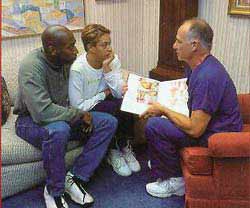
When meeting new patients, I begin the preoperative consultation by asking about the circumstances that have them brought to me. After greeting patients and having them get settled comfortably in my office, I ask: What made you decide to have a tubal reversal at this time? Each person or couple responds in their own way to this nondirective question, often touching on their personal, social, and medical history that have brought them to this point in their lives. Their responses provide the context for the discussion that follows about their tubal reversal procedure.
Reasons for Tubal Reversal
The reasons given for having a tubal reversal vary. The most common one is that the patient is in, or about to enter, a new marriage. Often, the man has no biological children. Even when both partners have children from previous marriages, they want to establish a family of their own. Less commonly, couples who already have children together want to expand their family. For these couples, their past choice to have a tubal ligation is no longer the right decision for them. Sometimes they describe religious considerations, a change in financial stability, or tragically, the death of a child.
Tubal Ligation Regret
Many women have told me that they had a tubal ligation as a way out of a bad situation. Some did not want to have any more children while in a failing or abusive marriage. Others felt pressured into having their tubes tied by a parent, other family members, spouse, or even their doctor. Women who had their tubes tied while undergoing a C-section often report they made a hasty decision while in labor and almost immediately felt that it was a mistake.
Post Tubal Ligation Syndrome
An increasing number of women describe a variety of symptoms that started when they had their tubes tied. Most often these include heavy or painful periods, headaches, irritability, or other emotional reactions that were not present before their tubal sterilization. Many of these patients have been treated by their doctors with hormones, anti-depressants, or other medications to no avail and usually have been told that Post Tubal Ligation Syndrome does not exist. But they are convinced from their own histories that it does. A study that we are currently conducting finds that over 90% of these women report improvement or complete relief of their symptoms after tubal reversal surgery. Clearly, more research about this controversial subject is warranted.
Informed Consent and Patient Follow-up
Whatever the reasons for having a tubal reversal, it is important for patients to be fully informed about the potential benefits and risks of the operation. Equally important is the long term follow-up that we maintain with patients after surgery. This has enabled us to document and report the outcomes of tubal reversal surgery to a much greater extent than has ever been done before.

Tags: children, doctor-patient relationship, marriage, medical, personal, post tubal ligation syndrome, reasons, social, tubal ligation, tubal ligation reversal, tubal reversal
Posted in research, tubal ligation, tubal reversal doctors, tubal reversal procedure, tubal reversal surgery, why tubal reversal | No Comments »