October 9th, 2009
The tubal reversal doctors at Chapel Hill Tubal Reversal Center performed the first reversal procedure after Adiana tubal sterilization on February 6, 2009. Today they report the success of the operation as confirmed by a positive pregnancy test submitted by the patient,Tina D., via her Pregnancy Report Form. Read the rest of this article and comment on it. »
October 4th, 2009
Tina is 35 years old mother of two children (a girl and a boy) who had an Adiana tubal sterilization 6 years ago. Tina has been married to her husband for nineteen years. She is a successful business entrepreneur who owns her own printing company. Tina’s decision to have a tubal reversal was prompted by the loss of her 14-year-old son. Read the rest of this article and comment on it. »
January 26th, 2009
Chapel Hill Tubal Reversal Center specializes in reversing tubal ligation and repairing damaged or blocked fallopian tubes. We perform over 800 tubal repair surgeries per year and have patients who travel to us from around the world and across the United States to have tubal surgery at our center.
Read the rest of this article and comment on it. »
January 15th, 2009
Susan is an international patient who traveled to Chapel Hill Tubal Reversal Center from Dubai, United Arab Emirates (UAE) for both tubal ligation reversal and ovarian conserving surgery. The day before her reversal surgery Susan and her partner, Stephen, sat with Dr. Monteith for a pre-operative interview. They have a unique story and we asked if they would allow us to share their story with our Tubal Reversal Blog and Tubal Reversal Message Board readers.
Read the rest of this article and comment on it. »
December 13th, 2008 Tubal blockage or tubal occlusion (the medical term) is the reason that tubal ligation prevents pregnancy. The blockage of the fallopian tube prevents joining of the sperm and egg and prevents eggs from being able to reach the uterine cavity. In the case of tubal sterilization, tubal blockage is intentional. Tubal blockage may also occur due to disease conditions and result in involuntary infertility. Tubal blockage, whether intentional or from disease, can be corrected with reconstructive tubal surgery.
Facts about Tubal Blockage
Tubal blockage affects millions of women in the US and hundreds of millions worldwide. More than 10 million women in the US, and more than 100 million worldwide, have had a tubal sterilization. There are approximately 6 million infertile couples in the US. It is estimated that 10-20% (600,000 to 1.2 million) cases of infertility may be due to tubal disease. In the majority of cases, tubal occlusion due to disease is caused by pelvic inflammatory disease (PID), an infection of the fallopian tubes (salpingitis) and sometimes the ovaries and pelvic cavity. PID is “silent”, unrecognized, or misdiagnosed in many and perhaps in the majority of cases.
November 29th, 2008 
In the Fall of 2008, I was preparing to meet with a patient who was traveling to Chapel Hill Tubal Reversal Center from Fort Campbell, Kentucky (KY) for a tubal ligation reversal. The patient’s name was Catrina. She is 33 years old and newly married to, Chris, an Army Staff Sergeant.
Catrina sent us an operative report from a diagnostic laparoscopy (camera surgery), that discovered she had a tubal ligation. During our interview, I asked her why her general gynecologist had done this surgery. I was surprised by the story she had to tell.
Read the rest of this article and comment on it. »
November 2nd, 2008 
Tubal Reanastomosis for International Patients
The widespread acceptance of tubal sterilization means that there are women throughout the world who decide to have their tubes reversed for a variety of reasons. Finding a doctor who is an expert in tubal reanastomosis, however, is much more difficult than the simple procedure of having the tubal ligation to begin with. With the availability of the internet, international patients increasingly are traveling to Chapel Hill Tubal Reversal Center from many different countries to have their tubes untied. This map in the recovery room shows just how far couples will travel to have the best doctors when it comes to reversing tied tubes.
Why Travel Thousands of Miles for Tubal Reanastomosis?
Someone unfamiliar with Chapel Hill Tubal Reversal Center might wonder what makes people travel from such long distances to have a tubal ligation reversal. The answer is simple – Dr. Berger and Dr. Monteith have the best doctor reputations as tubal ligation reversal specialists. That is what they do exclusively, and the Tubal Reversal Center is dedicated to just one thing – providing the best medical care for patients having their tubes untied. Dr. Berger has specialized in tubal reversal operations for 30 years and has the most experience reversing tied tubes of any doctor in the world. Dr. Monteith, who was trained by Dr. Berger, is the first doctor certified as a tubal reversal specialist. Their reputations as tubal reversal doctors are unsurpassed.
With the low cost of tubal reanastomosis at Chapel Hill Tubal Reversal Center, women who want their tubes untied are better financially coming to Chapel Hill than having their operation performed closer to home – and they get better results! Examine the pregnancy statistics from Chapel Hill Tubal Reversal Center. You will find no other tubal reversal doctors or medical center anywhere in the world with better proven results. In addition, Chapel Hill Tubal Reversal Center has the best patient safety record and highest patient satisfaction scores. It is rare to have a patient give less than a perfect score on their 2 week follow-up evaluation report.
Medical Translation Services
Many international patients and their spouse or other responsible adult speak English, but we also have provided international patient care where neither person spoke or understand English. In the case of individuals who are not fluent in English, Chapel Hill Tubal Reversal Center provides free medical translation services using certified medical translators. This ensures accurate communication among patients, their responsible adults, and Chapel Hill Tubal Reversal Center staff. Even though several members of our staff are fluent in Spanish, we feel that certified medical translators provide the best assurance of complete and accurate translation for international patient care.
Returning Home After the Reversal Procedure
International travel requires prolonged traveling time, often with multiple airline connections and waiting times between flights. We recommend, therefore, that couples traveling from other continents stay for at least 2 nights following the tubal reversal operation before returning home. We also recommend that international patients notify their airline carriers of the passenger’s recent surgery and request special services for transportation, early boarding, and complimentary upgrades if available. These help make the trip home as comfortable as possible.
More Information on Tubal Reanastomosis
September 18th, 2008 We are interrupting our 14 part Post Tubal Ligation Syndrome (PTLS) blog series to announce the first reported Monteith tubal reversal pregnancies and the arrival of the Monteith Miracle Tubal Reversal baby shirts!
Dr. Monteith’s Success at Reversing Tied Tubes

Dr. Charles Monteith started working full time as a tubal reversal specialist on July 21st 2008 at Chapel Hill Tubal Reversal Center. We have received four pregnancy reports from patients during his first two weeks of reversing tied tubes. His tubal reversal pregnancies have started to roll in!
The First Pregnancies
These four patients are representative of the patient population Chapel Hill Tubal Reversal Center and they come from all across the United States. They have had different types of tubal ligations and tubal lengths measuring from 3 to 8.5 cms.
Alaska (Falope ring tubal ligation)
New York (Bipolar cautery)
North Carolina (Bipolar cautery)
Idaho (Filshie clip tubal ligation)
And The Winner Is…
There has been an unofficial competition among patients of our Tubal Reversal Message Board for who would be the first patient to report a Monteith tubal reversal pregnancy. A patient from Alaska was the first to report a positive pregnancy test. She has confirmed that a first trimester ultrasound showed the pregnancy is in the uterus and is doing well. We have asked her to share her story and experience with us in a future blog article and she has said she will do this once her life calms down and her morning sickness disappears.
Why Have Pregnancies Been Reported So Soon?
These pregnancies have all occurred within the first two weeks of his reversing tied tubes. We typically ask our patients to wait a month until they try to conceive. So these patients likely started to attempt to conceive mid to end of August. They obviously had success and conceived at their first ovulation after ligation reversal!
To the patients of Dr. Monteith who have not yet conceived: keep up the faith and it should happen in due time. Most people do not realize how long it may take to become pregnant until they actually try. It can sometimes take up to 10-12 months before a successful conception can occur.
Monteith Miracle Tubal Reversal Baby Shirts

The Monteith Miracle Shirts have just arrived and are hot off the presses. They are ready to be sent out when the babies are delivered. All you have to do to receive one is:
Be a patient of Chapel Hill Tubal Reversal Center.
Be a tubal reversal patient of Dr. Montieth.
Become pregnant after tubal reversal.
Report the pregnancy to us.
Report the birth to us.
The first shirt goes out April of 2009 and the rest shortly thereafter. We wish these women good luck and all of the women who have had tubal ligation reversals by the tubal reversal doctors at Chapel Hill Tubal Reversal Center.
April 30th, 2008 Dr. Montieth’s Diary on Becoming a Tubal Reversal Specialist
Today we had another successful day of untying tubes. We began the day at 7AM. Four patients were scheduled for tubal ligation reversal surgery.
I was able to first assist Dr. Berger in the first three surgeries of the day, but had to leave prior to the fourth surgery. I am becoming proficient at identifying tubal anatomy and repairing tubes that have been tied.
The first patient had her tubes tied several years ago and she was now in a new relationship. Both she and her partner desired more children. They made the decision that they would undergo tubal ligation reversal and try to pursue their dream of having children together. Her surgery went well and we were able to successfully reverse her tubal ligation.
The second patient was similar to the first and desired more children. Her surgery also went well.
The third patient had her tubes tied, but after her surgery she lost a child to Sudden Infant Death Syndrome (SIDS). We often hear stories like this from many patients who come to Chapel Hill Tubal Reversal Center. It is extremely sad to hear the stories these patients tell. My heart aches for them as they try to replace their children and add to their family. Every time I hear these stories I think of my own children and what it would be like to experience such a loss. I can not fully imagine the pain from such loss but I can understand the strong desire to replace a cherished soul. I am happy to report that her surgery went extremely well and she had an excellent operative result. I take enjoyment out of every reversal surgery I have participated in, and feel an extra sense of accomplishment when assisting in untying tubes for patients who have lost children unexpectedly.
I had to leave before the fourth patient had surgery. Fortunately, I will be back in the morning for four more reversal surgeries and to meet four more interesting people and learn about their stories.
February 17th, 2008 Greetings from Dr. Monteith
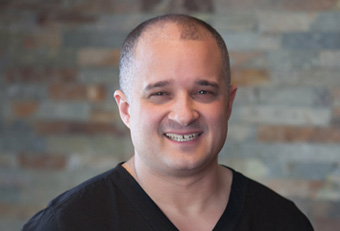
My name is Dr. Charles W. Monteith and I am happy to formally introduce myself as a tubal reversal physician. I will be joining Dr. Gary Berger in practice at Chapel Hill Tubal Reversal Center as a certified tubal ligation reversal specialist in the summer of 2008. I am currently undergoing certification in tubal ligation reversal under the careful guidance of Dr. Berger. My training began in January of 2008 and I am well underway. After two months of training, I have assisted Dr. Berger in more tubal ligation reversals than many infertility specialists have seen in a lifetime!
I am originally from Columbia, South Carolina. I attended college at Xavier University of Louisiana, where I graduated Summa Cum Laude in Chemistry Pre-med. I attended medical school at the University of California at San Francisco which was ranked as one of the top three medical schools in the United States when I was accepted. During medical school, I received a Howard Hughes research fellowship and conducted research in molecular genetics at the University of California at San Francisco.
I completed my residency in Obstetrics and Gynecology at the University of North Carolina at Chapel Hill. During residency, I was inducted into the Alpha Omega Alpha honor society and was the recipient of many different awards for resident and medical student teaching. I had the reputation as the resident who was the easiest to get along with, had the best rapport with patients, and was the overall most patient and best teacher.
After finishing residency, I accepted a Clinical Assistant Professor position with the Department of Obstetrics and Gynecology at the University of Chapel Hill in 2001. I worked as a Professor in Obstetrics and Gynecology at Wake Medical Hospital in Raleigh, N.C. for seven years. I practiced high risk obstetrics and advanced surgical gynecology. I delivered many babies and performed many surgeries while an Assistant Professor. My specialty was advanced laparoscopy and the performance of surgical procedures in the medically challenging patient. A significant amount of my time has been spent with the training and teaching of both medical students and residents.
Despite all of the above, my most important success has been the marriage to my wife, Mary, who has been the key element of support in all my endeavors. We married shortly after graduation from medical school in 1997, and she has been my constant support ever since. Together we have three beautiful children: Charles III (5yrs), Jordan (3yrs), and Madison (18months).
With my above training and family as support I look forward to a successful career in tubal reversal surgery. It is with special gratitude that I thank Dr. Berger and the staff at the Chapel Hill Tubal Reversal Center for accepting me with open arms and training me in both the science and art of tubal ligation reversal.