








Chapel Hill Tubal Reversal Center
109 Conner Drive Suite 2200, Chapel Hill, NC 27514 (919) 968-4656

Posts Tagged ‘Hulka clip’

Untying tied tubes: Hulka clips

Sunday, May 11th, 2008

Hulka Clip Sterilization

One common form of female sterilization is the use of Hulka clips to block the fallopian tubes. The Hulka clip was approved for use in the United States in the 1970’s and was invented in Chapel Hill, North Carolina by Dr. Jaroslav Hulka at the University of North Carolina at Chapel Hill.

Hulka clip in the laparoscopic applicator.The Hulka clip is a small, gold plated stainless steel spring loaded clip. The clip in introduced into the abdominal cavity via a laparoscopic clip applicator. This image shows the open clip in the applicator and the tip of the laparoscope with its fiber optic lighted end. When the clip is placed across the fallopian tube, it is closed and a small spring holds the clip firmly across the tube. The Hulka clip has the advantage of damaging only a very small portion of the fallopian tube- approximately 7mm (the thickness of three quarters stacked on each other).

Hulka clip closed across the fallopian tube.The Hulka clip causes bilateral tubal occlusion by squeezing a very small portion of the tube. The squeezed portion is deprived of its blood supply and eventually undergoes avascular necrosis (dies and is absorbed by the body). This causes the fallopian tube to be divided in half and the two ends to close up. The Hulka clip is held in place between the two divided tubal segments by a small amount of scar tissue which forms within the clip.

Hulka Clip Reversal

A common misconception is that the Hulka clips can simply be opened to reverse the sterilization process - that the tubes can be unclipped. Unfortunately, tubal ligation reversal for Hulka clips is not as simple as opening the clips. Hulka clip tubal occlusion is reversed by removing the section of the tube with the clip across it and then, using microsurgical techniques, joining the remaining tube segments back together in perfect alignment.

Tubal reversal of Hulka clip tubal occlusion is better than for most other methods of sterilization because such a minimal amount of tube is destroyed in the occlusion process. Approximately 76% of patients at Chapel Hill Tubal Reversal Center become pregnant after a reversal of a Hulka clip sterilization procedure.

Common Misconception About Tied Tubes
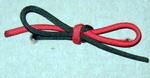
Tying tubes like tying a shoe lace.Many patients seem to imagine the fallopian tube is like a shoe lace which is tied up like a bow to prevent pregnancy. As tubal ligation reversal specialists, we wish it were that easy- then untying tied tubes would be easier!

‘Tying ones fallopian tubes’ is a common language phrase used to describe several different surgical procedures which result in sterilization (a procedure intended to permanently prevent pregnancy). The more correct medical term is bilateral (both sides) tubal occlusion (closure of the fallopian tube).

There are many different ways to occlude (close) the fallopian tubes: ligation and resection (tying and cutting), clips and rings, and coagulation (burning). No matter how the procedure is done the end result causes the tube to close, heal shut, and prevent sperm from fertilizing an egg.

Tubal Sterilization is Reversible

Many people believe tubal sterilization is permanent and irreversible. Although Hulka clip sterilization is intended to be permanent, this procedure is ideal for tubal reversal. The Chapel Hill Tubal Reversal Center is the one medical facility which specializes in tubal ligation reversal.

We have become experts in reversing all types of tubal ligations- or ‘untying’ tubes that have been ‘tied’!

Submitted by Dr. Charles Monteith

Ethics of Tubal Ligation

Wednesday, December 26th, 2007

Tubal Sterilization For Young Women With No Children

One of today’s patients at Chapel Hill Surgical Center was a woman in her thirties who recently become married and had a tubal ligation at age 24 years when she had no children. Her tubal ligation had been performed by a tubal coagulation procedure in which the fallopian tubes were burned at the junction of her uterus. The tubal lumen or opening within the uterine wall was scarred completely on both the right and left sides from the burning procedure. Therefore, the only way to perform a tubal reversal was through the technique of tubouterine implantation.

I mention this case because it was unnecessarily destructive, especially when performed for a young woman with no children. Many studies show that these are women who are most likely to change their minds later on and want to be able to have children. In this case, almost any other tubal ligation procedure would have been preferable. In my view, the best choice of a tubal ligation for a young woman with no children is the clip method (either Hulka clip or Filshie clip).

I have encountered other cases like this in the past. I wonder if the doctor who performed her tubal ligation considered the possibility that the patient might change her mind, and therefore it would be preferable to perform a tubal ligation better suited to reversing at a later time, should the need arise.

Comments Welcome

I am interested in what other people think about this.

Reversal of Tubal Ligation By Clips and Rings

Wednesday, November 28th, 2007

Tubal Ligation by Falope Ring and Hulka Clip

The falope ring is also called a tubal ring or tubal band.The Falope ring and Hulka clip are occlusive methods of tubal ligation. They block the fallopian tubes, but no tubal segments are clamped, removed, or burned. The Falope ring is also referred to as the tubal ring or tubal band. It constricts a segment of the fallopian tube very tightly, like an extra strong rubber band.

The Hulka clip is a miniature clamp placed across a very small (2-3 mm) segment of the fallopian tube. Another clip method besides the Hulka clip is the Filshie clip. The clips are similar except that the Hulka clip is made out of silastic and the Filshie clip is made out of metal. Occlusive methods of tubal ligation are predictably the best in terms of reversal since they damage such a tiny segment of the fallopian tube.

The Hulka Clip and Filshie Clip are the ideal methods of tubal ligation for tubal reversal.In contrast to the Pomeroy method, these occlusive devices are applied through a laparoscope. (Laparoscopy involves making a small incision below the belly button.) Many doctors prefer to apply tubal rings or clips when performing a tubal ligation on young women in recognition of the greater likelihood that a tubal reversal may be wanted in the future. Studies have shown that tubal ligation regret and the desire for tubal ligation reversal is more common when a tubal sterilization is performed among women in the twenties than among older women.

Tubal Clip and Ring Reversal Success

Each year Chapel Hill Tubal Reversal Center publishes current statistics about pregnancy rates and pregnancy outcomes among all of the women who have had tubal reversal procedures performed by Dr. Berger. The data for women who had tubal rings or clips shown in the table below is from our Tubal Reversal Pregnancy Study Report 2007.

Pregnancy Rates of Our Tubal Reversal Patients

The overall pregnancy rate after tubal reversal for women with clips or rings is 76% for patients at Chapel Hill Tubal Reversal Center. In the table below, the first column shows ages groups. The second column shows the number of women in each age group who had a tubal reversal. The third column shows the number of women in that group who became pregnant and the last column shows the percentage of women who became pregnant (the pregnancy rate) after their reversal procedures.

Pregnancy Rates After Tubal Reversal of Clips/Rings


Age


All Women


Pregnant (#)


Pregnant (
%)

<30

160

139

87%

30-34

318

265

83%

35-39

327

238

73%

40+

116

55

47%

Highest Pregnancy Rates After Tubal Reversal

The highest tubal reversal pregnancy rates are seen among women who have reversal of tubal clips or tubal rings. For women in their twenties, the pregnancy rate was 87%. The pregnancy rate ranged from 83% to 73% for women in their thirties. Among women age 40 or older, the pregnancy rate was significantly lower (47%), reflecting the decline in natural fertility with age. These pregnancy rates among our tubal reversal patients are similar to the pregnancy rates for women who have never had a tubal ligation to begin with.

Is Tubal Ligation Permanent?

Tuesday, November 20th, 2007

Almost every article one reads about tubal ligation stresses that it is permanent. Most doctors and the lay public believe this to be true. In my experience, however, tubal ligation is reversible in over 95% cases!

Doctors stress that tubal ligation is a permanent method birth control because it cannot be discontinued easily such as stopping the use of birth control pills or the patch, removing an IUD, or avoiding the use of barriers contraceptives (condom or diaphragm). In the past, reversing a tubal ligation procedure involved complicated surgery with its attendant high cost (up to $35,000). The outpatient tubal ligation procedure that I have developed is uncomplicated surgery and avoids the expense of hospital charges. This has reduced the cost of tubal reversal surgery to under $6000. This is less than the cost of a single treatment cycle with in vitro fertilization (averaging $10,000 - $12,000). My effort over the past 3 decades has been to make tubal reversal surgery easy to undergo and affordable for couples.

There are some methods of female sterilization that are not reversible. These include complete removal of the fallopian tubes (total salpingectomy) and extremely destructive methods of partial salpingectomy that do not leave two segments to repair. An example of the latter is when only a short portion of the tube is attached to the uterus and the remaining segment contains only fimbrial tissue with no tubal muscle or opening. In this case, the fimbrial tissue alone cannot be rejoined successfully to the uterine segment of tube. Fortunately, this is an unusual occurrence. In cases where there is a sufficient length of tube attached to the uterus, it can be opened and be able function normally even without the fimbrial end. This is called ampullary salpingostomy. This technique is useful in reversing a fimbriectomy (removal of the fimbrial or ovarian end of the fallopian tube).

Reviewing the operative report from a tubal ligation procedure usually will indicate how destructive the procedure was. When there is a question about this, diagnostic laparoscopy can be performed to examine what remains of the fallopian tubes. If there are sufficient segments to repair, tubal reversal can be done right then while the patient is under anesthesia.

The best method of tubal ligation to reverse is the clip procedure. The Hulka Clip was developed in the 1970s by Dr. Jaroslav Hulka, a professor of obstetrics and gynecology at the University of North Carolina at Chapel Hill. (Dr. Hulka was one of my most influential teachers during my residency in ob-gyn at UNC.) The tubal ring also is an excellent method for reversing. The clip and ring procedures tend to damage the least amount of the fallopian tube and leave behind long segments to repair.

The most common tubal ligation procedures involves tying and cutting the tubes (ligation/resection) or burning the tubes (coagulation). Experience shows that 98% of these procedures are reversible.

Summary: Tubal ligation is not really permanent in the sense that it can be reversed in almost all cases. This is fortunate for those women who want another chance to have a baby after having their tubes tied. Tubal reversal is more successful, less complicated, and less expensive than the alternative treatment of in vitro fertilization.

Call (919) 968-4656 To Speak With a Tubal Reversal Nurse

Pregnancy Announcements | Daily News | Latest Additions | Press | MD News | Site Map | Español
Website updated May 16th, 2008 Chapel Hill Tubal Reversal Center© Chapel Hill Tubal Reversal Center
109 Conner Drive Suite 2200, Chapel Hill, NC 27514 (919) 968-4656
   Tubal Reversal News ?>
109 Conner Drive Suite 2200, Chapel Hill, NC 27514 (919) 968-4656