Chapel Hill Tubal Reversal Center
109 Conner Drive Suite 2200, Chapel Hill, NC 27514 (919) 968-4656

Tubal Reversal Blog ‘pregnant’

Success of Reversing Tied Tubes by Dr. Monteith

Thursday, September 18th, 2008

We are interrupting our 14 part Post Tubal Ligation Syndrome (PTLS) blog series to announce the first reported Monteith tubal reversal pregnancies and the arrival of the Monteith Miracle Tubal Reversal baby shirts!

Dr. Monteith’s Success at Reversing Tied Tubes

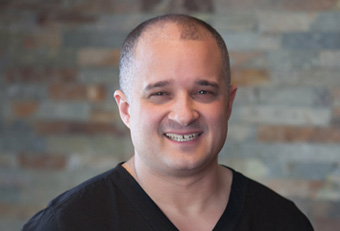
Dr. Monteith with Tubal Reversal Nurses at Chapel Hill Tubal Reversal Center.

Dr. Charles Monteith started working full time as a tubal reversal specialist on July 21st 2008 at Chapel Hill Tubal Reversal Center. We have received four pregnancy reports from patients during his first two weeks of reversing tied tubes.  His tubal reversal pregnancies have started to roll in!

The First Pregnancies

These four patients are representative of the patient population Chapel Hill Tubal Reversal Center and they come from all across the United States. They have had different types of tubal ligations and tubal lengths measuring from 3 to 8.5 cms.

Alaska (Falope ring tubal ligation)
New York (Bipolar cautery)
North Carolina (Bipolar cautery)
Idaho (Filshie clip tubal ligation)

And The Winner Is…

There has been an unofficial competition among patients of our Tubal Reversal Message Board for who would be the first patient to report a Monteith tubal reversal pregnancy. A patient from Alaska was the first to report a positive pregnancy test. She has confirmed that a first trimester ultrasound showed the pregnancy is in the uterus and is doing well. We have asked her to share her story and experience with us in a future blog article and she has said she will do this once her life calms down and her morning sickness disappears.

Why Have Pregnancies Been Reported So Soon?

These pregnancies have all occurred within the first two weeks of his reversing tied tubes. We typically ask our patients to wait a month until they try to conceive. So these patients likely started to attempt to conceive mid to end of August. They obviously had success and conceived at their first ovulation after ligation reversal!

To the patients of Dr. Monteith who have not yet conceived: keep up the faith and it should happen in due time. Most people do not realize how long it may take to become pregnant until they actually try. It can sometimes take up to 10-12 months before a successful conception can occur.

Monteith Miracle Tubal Reversal Baby Shirts

The Monteith Miracle Shirts have just arrived and are hot off the presses. They are ready to be sent out when the babies are delivered. All you have to do to receive one is:

Be a patient of Chapel Hill Tubal Reversal Center.
Be a tubal reversal patient of Dr. Montieth.
Become pregnant after tubal reversal.
Report the pregnancy to us.
Report the birth to us.

The first shirt goes out April of 2009 and the rest shortly thereafter. We wish these women good luck and all of the women who have had tubal ligation reversals by the tubal reversal doctors at Chapel Hill Tubal Reversal Center.

Challenging Tubal Ligation Reversal: Uchida Tubal Ligation

Friday, August 29th, 2008

Tubal Reversal Experts

The tubal ligation reversal experts of Chapel Hill Tubal Reversal Center are experienced at sterilization reversal. Many women who have had their ‘tubes tied’ will come to our center to have their ‘tubes untied’. Unfortunately, a ligation reversal is not as easy as ‘untying’ the tubes- we wish the process was that simple.

We employ a microsurgical approach to repair and reattach the ends of the tubes. This process is called tubotubal anastamosis, and provides a patient with an excellent chance of becoming pregnant naturally. We specialize in ligation reversal and in reversal of difficult tubal ligation procedures.
We would like to present the story of one of our patients who had an atypical sterilization procedure.

Reversal of an Unusual Sterilization Procedure

The patient’s name is Ofralinda. She and her husband, Juan, came to us from Texas. Ofralinda is 35 and she works as an OSHA compliance officer. Her husband is in construction. Ofralinda desired a tubal ligation reversal in order to have more children. She had a rare and atypical sterilization procedure termed the Uchida procedure.

Uchida Sterilization Procedure

A Japanese physician, Dr. Uchida, first described this method of sterilization in 1961. This method involves removing a large segment of the fallopian tube and suturing (sewing) the cut end of the fallopian tube into the wall of the uterus. Dr. Uchida first published information about his method of sterilization after having performed over 50,000 procedures without any pregnancy failures. This is an effective but also  complicated method of surgical sterilization. Most modern physicians have never performed or seen a Uchida sterilization. We have seen several patients who have presented with a Uchida sterilization procedure and we have had success with reversal of this method.

Uchida Sterilization Reversal

Ofralinda had a 60-minute outpatient tubal ligation reversal. Her surgery went well. We found her tubes to be short (due to the large amount of tube removed with her initial Uchida sterilization) but otherwise healthy. We were able to successfully repair both of her fallopian tubes. She has since been discharged back to her home and we wish her well. We would like to hear a report of a successful pregnancy from her within the year.

Sterilization Reversal at Chapel Hill Tubal Reversal Center

We specialize in tubal ligation reversal. Our tubal ligation reversal specialists perform over 800 reversal procedures every year on women from across the world. We regularly have patients from as far away as Hawaii, Alaska, and the Caribbean. Occasionally, we will have patients from Australia, Asia, and Europe.

Most tubal ligation procedures are reversible. The pregnancy rates after reversal are generally higher than after in vitro fertilization (IVF) and we specialize in difficult tubal reversal procedures.

Week number two: A beautiful ligation reversal

Monday, August 4th, 2008

I started week number two at Chapel Hill Tubal Reversal Center with a beautiful ligation reversal.

Our patient was from North Carolina. She had a tubal ligation, which was done with bipolar cautery (burning) several years ago.

She went to her doctor to have her tubes tied, and after the surgery, her doctor told her, “The procedures I do are irreversible. You will never get pregnant again.” She told me she was fine with this at the time, but deep down she had feelings about why the doctor did such an aggressive procedure. She told me she thought to herself, what if she ever wanted to get pregnant again?

Well none of us can predict the future. As things so often go, she met a very special man who did not have any children. They married and together they desired a child. They came to us seeking to have her tubes untied.

I reviewed her operative note and things did not look good! Her operative note described cautery of the tube starting at the ampullary segment (the very end of the tube), and then cauterizing along the entire tube towards the side of the uterus. From the appearance of the operative note, it appeared most of the tube had been destroyed.

I recommended a screening laparoscopy to give us a quick evaluation before undergoing any surgical incisions. This would allow us to stop early if the tubes were not repairable. Unfortunately because of her Body Mass Index (BMI) issues, we were not able to proceed with a laparoscopy. Although we will perform tubal reversals for patients with BMIs up to 35, we do not perform laparoscopy for patients with a BMI over 30 due the possible increased risk of surgical complications.

This patient wanted a reversal and it was her personal decision to undergo a surgical incision so she could have an evaluation of her tubes.

As we started her surgery, we were uncertain if she would have repairable tubes. This was a wonderful patient who emanated a sense of enthusiasm and faith. She was someone you would characterize as having a beautiful personality. The entire surgical team was praying we would be able to help her.

As we started the incision, I was inwardly a little pessimistic that we would not be able to find any repairable tubes. I was afraid her doctor’s declaration about the nature of his tubal occlusions would be correct. I worried we would have to open her up, observe both her tubes having been obliterated and have to close her without doing her any good.

I was especially fearful of having to make the long surgeon’s walk. The long surgeon’s walk is the short, but measurable walk to the recovery/waiting room to give bad news to a patient’s family.

The worst thing for any tubal reversal surgeon is to have to tell a patient we could not repair their tubes. This is very comparable to a general surgeon having to tell a family their loved one did not make it through a risky surgery. To be honest, the two bad results are vastly different, but for a woman desiring tubal ligation reversal, it can feel very similar.

Things seem to happen for reasons. We found her to have good end segments and, as the operative note described, the tubes were cauterized to the very extreme side of the uterus. We were able to recover about 3cm of distal tube and found the remaining tubal lumens where they were hidden deep in the walls of the uterus. Isthmic-ampullary tubotubal anastamosis (tubal ligation reversal) was done on both sides and the average length of both tubes was about 3cm.

They ended up being short tubes. But short tubes are theoretically better than no tubes or closed tubes. We do have patients report pregnancies with tubal lengths much shorter than these.  We cannot create tubes. We can only work with what we find. Pregnancy for this patient is now very, very possible and prior to her reversal surgery, a natural pregnancy was impossible.

After the surgery, the entire team was thrilled. We never want to disappoint any patient, and we were able to give this woman both of her tubes back.

Dr. Berger and I were both very happy for this patient. We will be even happier when she reports a sticky bean to us (that’s a pregnancy for those who are not savvy to our Message Board lingo)!

Defining Hope at Chapel Hill Tubal Reversal Center

Wednesday, June 25th, 2008
hope (hdefinition of hopep)v.t. & i, expect or look forward to, with desire and confidence. –n. 1, confidence in a future event; expectation of something desired. 2, what is hoped for. 3, something that arouses or justifies hope.

At Chapel Hill Tubal Reversal Center, Dr. Gary Berger understands that hope is not just a word to the hundreds of women who come to his center each year. Hope is what they find in him.

When Amanda Nelson first decided to have a tubal ligation in 1997, she never imagined she would find herself in Chapel Hill, North Carolina, 4,000 miles away from her home in Cumbria, England about to undergo a tubal ligation reversal.

“I had been married for a number of years when my marriage broke down,” said Amanda. “I had two boys to look after, so I waited a year and then went ahead with my tubal ligation. At the time, the thought of having children with a different father didn’t appeal to me.”

Like Amanda, many women who come to Chapel Hill Tubal Reversal Center have faced life changes such as divorce, loss of a child or remarriage.

“Years went by, and then I met David. He had no children and happened to mention he would like one of his own some day,” said Amanda. “It took me awhile to think about it, but decided to look up having the operation.”

The couple sought the advice of Amanda’s local gynecologist. She suggested that they try in-vitro fertilization. But due to the high cost and limited chance of conceiving, the couple decided to begin researching tubal reversal surgery.

“David and I came to the conclusion that you only get one chance with IVF, and if it didn’t work, you have to start all over again,” said Amanda. “The emotional side of it and the high cost put us off.”

The Search Begins

The couple began searching online for tubal reversal specialists. Their search brought them to the Chapel Hill Tubal Reversal Center Web site and Dr. Gary Berger.

“My doctor said we would have more of a chance of getting pregnant if the surgeon had done the operation many times,” said Amanda. “ I couldn’t believe my luck when I found Dr. Berger.”

Over the past 28 years, Dr. Gary Berger has performed over 7,000 tubal reversals as a one-hour, outpatient operation. Recognized as a leader in the field, Dr. Berger has been featured on The Learning Channel and Discovery Health.

Patients come to Chapel Hill from across the United States and abroad to have him perform the procedure. Using microsurgical techniques he developed and refined, Dr. Berger can successfully repair the fallopian tubes in 98 percent of the women who want their tubes untied.

“At first it seemed silly to travel that far to have surgery,” said Amanda. “But when David and I read the Web site and learned about Dr. Berger, we knew he was the man for the job.”

On April 1, Amanda contacted the center to schedule her tubal reversal surgery. After completing the required forms and health history with a tubal reversal nurse, Amanda was ready to begin her long journey to North Carolina.

When the couple arrived at the Raleigh-Durham International Airport in late May, they were greeted by Janice Barrett of Red Carpet Coach, a transportation service that offers discounted rates to Dr. Berger’s patients.

“Janice picked us up and gave us a little tour of the town,” said Amanda. “She drove us by Dr. Berger’s office, then to the hotel. It was nice knowing we were close by.”

Dr. Berger’s patients stay at the Sheraton Chapel Hill Hotel, where they receive a discounted rate. This convenient location allows for quick and comfortable access to the hotel following surgery.

The First Meeting

On the morning of her surgery, Amanda and David arrived at the center for a patient consultation and first meeting with Dr. Berger. As Amanda describes, her first meeting with Dr. Berger was a special experience.

“I remember years ago watching a television show on the Discovery channel about a lady having the tubal reversal surgery and Dr. Berger was on it,” said Amanda. “Being on his Web site most days, I used to look at his photo and think, it won’t be long now before I’m in Chapel Hill. So when I finally met him, it just felt special…he was a star, and a humble one at that.”

Immediately following her operation, Amanda was alert and comfortable. David arrived shortly in the post-anesthesia care unit to be by her side.

“I woke up from surgery to my David, and I was in no pain,” Amanda said. “I was shocked because when I had my tubal ligation, I woke up in extreme pain, so I was really pleased. I was given time to wake up and told the good news by Dr. Berger that everything went well and my tubes were repaired.”

Most women are typically discharged from the facility within two hours after surgery. And most resume normal activities within five to 10 days. This outcome is far better for patients than the standard approach to tubal ligation reversal that requires hospitalization for several days, longer recovery times and unnecessary hospital costs.

“I didn’t experience any pain the day of my surgery,” said Amanda. “And I was able do a little sightseeing of Chapel Hill the day after my surgery.”

Home Sweet Home

After returning to England, Amanda joined the Chapel Hill Tubal Reversal Center message board. The message board is a place for patients and those interested in tubal reversal and women’s health issues to share their stories.

“The Web site is wonderful,” says Amanda. “I’ve found the message board to be very helpful, and I’ve managed to help some future patients of Dr. Berger’s that live here in the UK.”

When asked to describe her experience in Chapel Hill, Amanda gave two words…first class.

“My experience was better than I expected,” said Amanda. “David was very happy with the care I received, and I think he enjoyed the care he received, too. You don’t leave the men out, I think that’s important.”

Giving hope to patients is something Dr. Berger and his team of tubal reversal professionals doesn’t take lightly. Hope isn’t just a word; it’s their mission.

Learn More

To learn more about Dr. Gary Berger and his team at Chapel Hill Tubal Reversal Center, visit www.tubal-reversal.net or call 919.968.4656.

Submitted by Lisa Hourmouzis, RN
Tubal Reversal Nurse

Untying Tied Tubes: Falope Ring Sterilization

Wednesday, May 14th, 2008

Falope Ring Sterilization

Falope ring tubal sterilization.The Yoon Falope rings were developed in the 1960’s as a safer alternative to laparoscopic monopolar cautery tubal sterilization. This procedure is performed by inserting a laparoscope just under the belly button. The fallopian tube is then identified and a device holds the tube while the silastic ring is slid over a 2-3 cm ’knuckle’ of tube that is kinked off by the ring. This is done once for each side.

The common misperception is that the Falope ring is what prevents pregnancy and that reversal of the procedure simply requires removal of the ring. The Falope ring causes the squeezed ’knuckle’ of tube to undergo avascular necrosis (to die and become absorbed by the body). After this happens the ends of the tubal segments outside the ring close up, thereby preventing sperm from reaching the egg.

Falope Ring Sterilization Reversal

Reversing Falope ring sterilization is not as easy as just removing the ring. The closed ends of the tubes must be opened and the tubal segments must be rejoined.

Falope rings cause destruction of a minimal length of fallopian tube and reversal of this type of tubal ligation gives excellent results. Approximately 75% of patients at Chapel Hill Tubal Reversal Center become pregnant after a reversal of a Falope ring sterilization procedure.

Many people believe tubal sterilization is permanent and irreversible. Although tubal sterilization with Falope rings is intended to be permanent, this procedure can be reversed. Chapel Hill Tubal Reversal Center is the only medical facility that specializes exclusively in reversal of tubal ligation.

More information on » pregnant
Pregnancy Announcements | Daily News | Latest Additions | Press | Privacy Policy | MD News | Mission Statement | Site Map | Español
Website updated October 12th, 2008 Chapel Hill Tubal Reversal Center© Chapel Hill Tubal Reversal Center
109 Conner Drive Suite 2200, Chapel Hill, NC 27514 (919) 968-4656
   Tubal Reversal News

http://www.tubal-reversal.net/includes/footer.php  was last modified on September 7th, 2008 21:16:23

109 Conner Drive Suite 2200, Chapel Hill, NC 27514 (919) 968-4656