






Chapel Hill Tubal Reversal Center
109 Conner Drive Suite 2200, Chapel Hill, NC 27514 (919) 968-4656

Tubal Reversal Blog ‘tubal reversal specialist’

Success of Reversing Tied Tubes by Dr. Monteith

September 18th, 2008

We are interrupting our 14 part Post Tubal Ligation Syndrome (PTLS) blog series to announce the first reported Monteith tubal reversal pregnancies and the arrival of the Monteith Miracle Tubal Reversal baby shirts!

Dr. Monteith’s Success at Reversing Tied Tubes

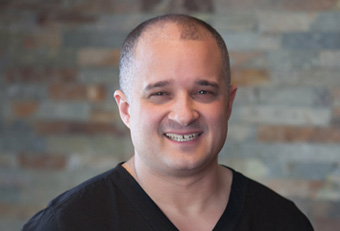
Dr. Monteith with Tubal Reversal Nurses at Chapel Hill Tubal Reversal Center.

Dr. Charles Monteith started working full time as a tubal reversal specialist on July 21st 2008 at Chapel Hill Tubal Reversal Center. We have received four pregnancy reports from patients during his first two weeks of reversing tied tubes.  His tubal reversal pregnancies have started to roll in!

The First Pregnancies

These four patients are representative of the patient population Chapel Hill Tubal Reversal Center and they come from all across the United States. They have had different types of tubal ligations and tubal lengths measuring from 3 to 8.5 cms.

Alaska (Falope ring tubal ligation)
New York (Bipolar cautery)
North Carolina (Bipolar cautery)
Idaho (Filshie clip tubal ligation)

And The Winner Is…

There has been an unofficial competition among patients of our Tubal Reversal Message Board for who would be the first patient to report a Monteith tubal reversal pregnancy. A patient from Alaska was the first to report a positive pregnancy test. She has confirmed that a first trimester ultrasound showed the pregnancy is in the uterus and is doing well. We have asked her to share her story and experience with us in a future blog article and she has said she will do this once her life calms down and her morning sickness disappears.

Why Have Pregnancies Been Reported So Soon?

These pregnancies have all occurred within the first two weeks of his reversing tied tubes. We typically ask our patients to wait a month until they try to conceive. So these patients likely started to attempt to conceive mid to end of August. They obviously had success and conceived at their first ovulation after ligation reversal!

To the patients of Dr. Monteith who have not yet conceived: keep up the faith and it should happen in due time. Most people do not realize how long it may take to become pregnant until they actually try. It can sometimes take up to 10-12 months before a successful conception can occur.

Monteith Miracle Tubal Reversal Baby Shirts

The Monteith Miracle Shirts have just arrived and are hot off the presses. They are ready to be sent out when the babies are delivered. All you have to do to receive one is:

Be a patient of Chapel Hill Tubal Reversal Center.
Be a tubal reversal patient of Dr. Montieth.
Become pregnant after tubal reversal.
Report the pregnancy to us.
Report the birth to us.

The first shirt goes out April of 2009 and the rest shortly thereafter. We wish these women good luck and all of the women who have had tubal ligation reversals by the tubal reversal doctors at Chapel Hill Tubal Reversal Center.

Defining Hope at Chapel Hill Tubal Reversal Center

June 25th, 2008
hope (hdefinition of hopep)v.t. & i, expect or look forward to, with desire and confidence. –n. 1, confidence in a future event; expectation of something desired. 2, what is hoped for. 3, something that arouses or justifies hope.

At Chapel Hill Tubal Reversal Center, Dr. Gary Berger understands that hope is not just a word to the hundreds of women who come to his center each year. Hope is what they find in him.

When Amanda Nelson first decided to have a tubal ligation in 1997, she never imagined she would find herself in Chapel Hill, North Carolina, 4,000 miles away from her home in Cumbria, England about to undergo a tubal ligation reversal.

“I had been married for a number of years when my marriage broke down,” said Amanda. “I had two boys to look after, so I waited a year and then went ahead with my tubal ligation. At the time, the thought of having children with a different father didn’t appeal to me.”

Like Amanda, many women who come to Chapel Hill Tubal Reversal Center have faced life changes such as divorce, loss of a child or remarriage.

“Years went by, and then I met David. He had no children and happened to mention he would like one of his own some day,” said Amanda. “It took me awhile to think about it, but decided to look up having the operation.”

The couple sought the advice of Amanda’s local gynecologist. She suggested that they try in-vitro fertilization. But due to the high cost and limited chance of conceiving, the couple decided to begin researching tubal reversal surgery.

“David and I came to the conclusion that you only get one chance with IVF, and if it didn’t work, you have to start all over again,” said Amanda. “The emotional side of it and the high cost put us off.”

The Search Begins

The couple began searching online for tubal reversal specialists. Their search brought them to the Chapel Hill Tubal Reversal Center Web site and Dr. Gary Berger.

“My doctor said we would have more of a chance of getting pregnant if the surgeon had done the operation many times,” said Amanda. “ I couldn’t believe my luck when I found Dr. Berger.”

Over the past 28 years, Dr. Gary Berger has performed over 7,000 tubal reversals as a one-hour, outpatient operation. Recognized as a leader in the field, Dr. Berger has been featured on The Learning Channel and Discovery Health.

Patients come to Chapel Hill from across the United States and abroad to have him perform the procedure. Using microsurgical techniques he developed and refined, Dr. Berger can successfully repair the fallopian tubes in 98 percent of the women who want their tubes untied.

“At first it seemed silly to travel that far to have surgery,” said Amanda. “But when David and I read the Web site and learned about Dr. Berger, we knew he was the man for the job.”

On April 1, Amanda contacted the center to schedule her tubal reversal surgery. After completing the required forms and health history with a tubal reversal nurse, Amanda was ready to begin her long journey to North Carolina.

When the couple arrived at the Raleigh-Durham International Airport in late May, they were greeted by Janice Barrett of Red Carpet Coach, a transportation service that offers discounted rates to Dr. Berger’s patients.

“Janice picked us up and gave us a little tour of the town,” said Amanda. “She drove us by Dr. Berger’s office, then to the hotel. It was nice knowing we were close by.”

Dr. Berger’s patients stay at the Sheraton Chapel Hill Hotel, where they receive a discounted rate. This convenient location allows for quick and comfortable access to the hotel following surgery.

The First Meeting

On the morning of her surgery, Amanda and David arrived at the center for a patient consultation and first meeting with Dr. Berger. As Amanda describes, her first meeting with Dr. Berger was a special experience.

“I remember years ago watching a television show on the Discovery channel about a lady having the tubal reversal surgery and Dr. Berger was on it,” said Amanda. “Being on his Web site most days, I used to look at his photo and think, it won’t be long now before I’m in Chapel Hill. So when I finally met him, it just felt special…he was a star, and a humble one at that.”

Immediately following her operation, Amanda was alert and comfortable. David arrived shortly in the post-anesthesia care unit to be by her side.

“I woke up from surgery to my David, and I was in no pain,” Amanda said. “I was shocked because when I had my tubal ligation, I woke up in extreme pain, so I was really pleased. I was given time to wake up and told the good news by Dr. Berger that everything went well and my tubes were repaired.”

Most women are typically discharged from the facility within two hours after surgery. And most resume normal activities within five to 10 days. This outcome is far better for patients than the standard approach to tubal ligation reversal that requires hospitalization for several days, longer recovery times and unnecessary hospital costs.

“I didn’t experience any pain the day of my surgery,” said Amanda. “And I was able do a little sightseeing of Chapel Hill the day after my surgery.”

Home Sweet Home

After returning to England, Amanda joined the Chapel Hill Tubal Reversal Center message board. The message board is a place for patients and those interested in tubal reversal and women’s health issues to share their stories.

“The Web site is wonderful,” says Amanda. “I’ve found the message board to be very helpful, and I’ve managed to help some future patients of Dr. Berger’s that live here in the UK.”

When asked to describe her experience in Chapel Hill, Amanda gave two words…first class.

“My experience was better than I expected,” said Amanda. “David was very happy with the care I received, and I think he enjoyed the care he received, too. You don’t leave the men out, I think that’s important.”

Giving hope to patients is something Dr. Berger and his team of tubal reversal professionals doesn’t take lightly. Hope isn’t just a word; it’s their mission.

Learn More

To learn more about Dr. Gary Berger and his team at Chapel Hill Tubal Reversal Center, visit www.tubal-reversal.net or call 919.968.4656.

Submitted by Lisa Hourmouzis, RN
Tubal Reversal Nurse

Why Women Get Tied Tubes Untied

June 21st, 2008

Over a year ago, I approached Dr. Berger at Chapel Hill Tubal Reversal Center to start a new career as a tubal ligation reversal specialist. When I started to pursue my interest and training in tubal reversal surgery, I naively thought that only women who wanted to have another child had their tied tubes untied. I have come to realize that some women seek to have their tubes untied for many reasons other than to have another child after tubal ligation.

Of course the number one reason is to have more children, but there are many more and equally important reasons patients give. Some common reasons patients come for tubal ligation reversal are to:

  • relieve symptoms associated with a tubal ligation (PTLS)
  • feel whole again
  • be like God intended them to be
  • comply with their religious tenants
  • feel more like a woman
  • relieve regret of a prior mistake
  • correct a decision made during a bad relationship
  • fill the emptiness from the loss of a child or another loved one

As a generalist ob/gyn, I was always keenly aware of how many women bore both the burden of having children and the burden of sterilization. It was only after I became a ligation reversal specialist I saw how heavy the burden of tubal ligation could be. Now I have the opportunity to help in these situations and feel gratified that my training as a tubal reversal surgeon is progressing nicely under Dr. Berger’s mentorship.

Submitted by Dr. Charles Monteith
Tubal Reversal Specialist
Chapel Hill Tubal Reversal Center

Is Your Doctor Cold on the Idea of Tubal Reversal?

May 26th, 2008

Submitted by Dr. Monteith
Chapel Hill Tubal Reversal Center

Many doctors will give you less than a warm response when you ask about tubal ligation reversal. Ever wonder why?

I would like to use myself as an example. I started my obstetrics and gynecology (ob/gyn) residency in July 1997 and finished in June 2001. I never saw a single tubal reversal operation performed at the university where I trained. Not one. I saw many unusual and rare things, but I never saw a tubal ligation reversal. I am not alone. Many other doctors would probably tell you the same thing if you asked them.

Lack of Familiarity or Training

Most doctors- especially those who have trained within the last 15 years – are unfamiliar with tubal ligation reversal. The reason is simple. Ligation reversal is considered elective surgery. As a result, these procedures are rarely done in hospitals. Therefore, doctors in training get little or no exposure to these surgical procedures. Because of this, most doctors have little knowledge about these types of operations.

Sometimes doctors in training will reason that if they never saw a particular operation, the surgery does not exist because it is not beneficial and may even be harmful. Of course, this is faulty reasoning.

I would have never thought ligation reversal is an effective surgery if it were not for a three minute experience I had when I was a second year resident doing my reproductive endocrinology rotation.

I was with a physician who was the head of our reproductive endocrinology department. We were counseling a 38-year-old patient who was married, had a tubal ligation and wanted to become pregnant again. At the conclusion of her visit, she had asked what she should do? Since I had seen every patient with fallopian tube problems treated with in-vitro fertilization (IVF), I mumbled to myself, “We are going to recommend you get IVF.” Before I could finish my mumbled response, the director said, “I recommend you get a tubal ligation reversal.” My mouth dropped open! Why did we recommend an operation that we did not perform and one I had never seen? I remember exactly what he said next, “We can do this procedure for you. The cost of tubal reversal will be $15,000 here at the hospital. I recommend you talk with Dr. Gary Berger, a tubal reversal specialist who does them for considerably less cost.”

After the conversation, I asked him why we didn’t do tubal reversal procedures at our hospital. He responded, “Charles, we have to charge patients more for this surgery in the hospital. Since patients have to pay out of pocket, most people will be unable to afford the surgery with us. This is a great procedure for her because she will have the ability to get pregnant many times.”

“But isn’t the success rate less than 50 percent?”, I asked. He dropped his glasses down, looked over the rims and told me in a very direct voice, “No! In the best of hands, the success rate is 80 percent.” Somehow he seemed offended that I thought he had recommended a bad treatment.

This conversation happened in 1998. I filed this brief exchange in my memory and mostly forgot about it for the rest of my training.

Other Mistaken Ideas Doctors May Have

Many doctors might say a general ob/gyn resident would not see any of these surgeries while training, but a doctor in training as a reproductive endocrinologist would. Unfortunately, this is not true. I had two friends who trained to be reproductive endocrinology specialists. One did two tubal reversals over a three year period of training, the other did none.

It is unfortunate that my friends, who had little or no experience with reversal surgery, are going to be the same doctors who will counsel patients about it. No wonder they routinely recommend IVF – a treatment that they received almost exclusive training in during their fellowship programs.

Why I Came to Chapel Hill Tubal Reversal Center

I hope my personal experience can illustrate why general ob/gyn doctors may not support their patients who want to have their tubal ligations reversed, and why reproductive specialists mostly do IVF. I view tubal ligation reversal as a disappearing surgical skill that may not be available to patients in the future. This is why I asked to join Dr. Berger’s staff at Chapel Hill Tubal Reversal Center. To help women with tubal ligations who want to get pregnant is the reason why I have decided to embark on the path to become a tubal ligation reversal specialist.

Pathology Reports Before Tubal Ligation Reversal

May 25th, 2008

At Chapel Hill Tubal Reversal Center, we want to maximize the chances for pregnancy after tubal ligation reversal for all of our patients. One step that is helpful in planning for a tubal reversal procedure is examining the pathology report from a patient’s medical record. Pathology reports can provide critical information to a tubal reversal specialist since they convey additional information beyond what is contained in the operative report describing the tubal ligation.

What is a pathology report?

A pathology report- sometimes shortened to ‘path report’- is a typed report from a pathologist (doctor who studies healthy and diseased tissue) that describes the removed tubal segments. Usually when tissue is removed by a surgical operation, it is sent to a pathologist for examination. After this examination, a pathologist will create a typed report describing what was observed.

When a tubal ligation and resection procedure has been performed, a segment of fallopian tube was removed and most likely sent to a pathologist. Therefore, a pathology report should exist in the patient’s medical record. When a sterilization has been performed by tubal electrocautery or with tubal clips or rings, there will not be a pathology report because no tubal tissue is removed with these tubal ligation methods.

A pathology report will help our tubal reversal doctors determine exactly what was done during a ligation and resection procedure and what your chances of tubal reversal success will be.

Examples of Pathology Reports After Tubal Ligation

Here are some examples of what the pathology reports may show after a tubal ligation and resection:

Scenario 1
Operative note states, “A standard ligation and resection was done.” Pathology report states, “Two 1.5 cm isthmic sections of fallopian tube were examined.” In this case, the pathology report confirms that small amounts of isthmic tubal segments were removed and the chance of successful ligation reversal is very good.

Scenario 2

Operative note states, “A bilateral ligation was done…tubes were resected.” Pathology report states, “Two 4 cm sections of fallopian tube were examined and fimbrial ends were present on both sections.” In this case, the pathology report demonstrates that the patient has had a fimbriectomy. We would advise the patient that fimbrectomy reversal will be the appropriate procedure to reverse this type of tubal ligation.

Scenario 3
Operative note states, “A typical bilateral tubal ligation was done.” Pathology report states, “Two 7 cm section of fallopian tubes were examined.” In this case, the pathology report shows that large amounts of tubal length were removed. This is not a typical bilateral tubal ligation, and the chance of a reversing tubal ligation is remote. In this case, we would advise the patient that IVF would be a better treatment option for her than tubal reversal surgery.

Get Expert Opinion

As tubal reversal experts who specialize in ‘untying tied tubes’,  we have found that most tubal ligations are reversible. Any patient considering ligation reversal should send us a copy of their operative report and, if ligation and resection was done, a copy of the pathology report. We will review these reports, without charge, and provide the best recommendation for becoming pregnant after tubal ligation.

Submitted by Dr. Charles Monteith
Chapel Hill Tubal Reversal Center

A Patient at Chapel Hill Tubal Reversal Center

May 21st, 2008

As my training as a Tubal Reversal Specialist continues, I would like to share the story of one of our recent patients.

This patient lives in Pennsylvania. She came to Chapel Hill Tubal Reversal Center for a ligation reversal and her story is similar to many of the women who come here to have their tubes untied.

She is 32 and had two older teenage children. She had her tubes tied after her second child. Unfortunately, her husband died after her tubal ligation, but she eventually found a new partner who did not have any children. She and her partner eventually decided they wanted a child together. They had researched the possibility of having another child and made an appointment with an infertility specialist in Pennsylvania. She considered in-vitro fertilization (IVF); however, she and her infertility specialist decided the better option for her would be tubal ligation reversal. Her infertility specialist recommended Dr. Berger as the tubal reversal expert who could give her the best tubal reversal procedure so she and her partner could pursue their desire of having more children.

When the patient came to Chapel Hill Tubal Reversal Center for her pre-operative visit, her partner was unable to travel with her for the reversal surgery; however, she did bring a close friend. We reviewed her medical history. Her tubal ligation surgery was performed many years ago and there were no operative or pathology reports available. She was able to get some information from her ob/gyn doctor who told her she had the ’standard type of tubal ligation’. She told us about her history and her dreams of having more children.

I was happy that she had excellent operative results and a successful bilateral ligation reversal. She stayed overnight at the local Sheraton Hotel where she was seen in the morning by one of the Chapel Hill Tubal Reversal Nurses. Following the postoperative check-up, she returned to her home in Pennsylvania to pursue her quest for adding more children to her family. We are eager to hear from her as soon as she has a positive pregnancy test!

Submitted by Dr. Charles Monteith
Chapel Hill Tubal Reversal Center

Tubal Reversal Specialist – Dr. Monteith Comments

April 15th, 2008

My First Day at Nourishing Hopes and Dreams

My first day as a tubal ligation reversal specialist will always be remembered. I began my training with Dr. Berger during the first week of January 2008. We started the day off by meeting the patients who would be undergoing tubal ligation reversal at Chapel Hill Tubal Reversal Center. I met four patients of different ages, backgrounds, and ethnicities . They were all very different people who all desired the same thing: reversal of their tubal ligation.

  • The first patient was in her forties, she had emigrated from Ethiopia, her last child was more than twelve years ago, and she desired a chance to have another child.
  • The second patient was in her thirties and her previous husband had died unexpectedly. She had children but her fiancĂ© did not have any children. Together, they desired a child.
  • The third patient,in her late twenties, had two children and a tubal ligation. Several years later she subsequently found a new partner and he desired a child with her. So while he was deployed overseas, she came for a tubal ligation and a chance for a new future when he returned from his military deployment.
  • The fourth patient was in her late twenties and had several children. When she and her partner were in their early twenties they were financially maxed out and she had her tubes tied as an act of desperation. Several years later, she and her husband subsequently became financially stable and they wanted another child. They considered IVF but decided that a reversal was a better option for them. We also learned of an extremely sad story from this patient. She had a friend who had a tubal ligation. This friend had all of her four children die overnight in a house fire. This friend desperately has hope for a future reversal of her tubal ligation and was hoping to obtain a tubal reversal in the future.

All of the tubal reversal surgeries went well that day. The patients all did well and had technically excellent tubotubal reanastamosis (tubal ligation reversal) procedures. They all recovered well and went home to pursue their quest to add to their families. For as long as a live, I will never be able to forget these women, their partners and the stories they told. I can never forget their quest to add children to their lives. For them I hope they attain what they desire. My first lesson as a Tubal Reversal Specialist was that no one can predict the future, but if you always look hard enough you can always find a way – and someone to help- to correct prior mistakes.

Introducing Charles W. Monteith MD

February 17th, 2008

Greetings from Dr. Monteith

My name is Dr. Charles W. Monteith and I am happy to formally introduce myself as a tubal reversal physician. I will be joining Dr. Gary Berger in practice at Chapel Hill Tubal Reversal Center as a certified tubal ligation reversal specialist in the summer of 2008. I am currently undergoing certification in tubal ligation reversal under the careful guidance of Dr. Berger. My training began in January of 2008 and I am well underway. After two months of training, I have assisted Dr. Berger in more tubal ligation reversals than many infertility specialists have seen in a lifetime!

I am originally from Columbia, South Carolina. I attended college at Xavier University of Louisiana, where I graduated Summa Cum Laude in Chemistry Pre-med. I attended medical school at the University of California at San Francisco which was ranked as one of the top three medical schools in the United States when I was accepted. During medical school, I received a Howard Hughes research fellowship and conducted research in molecular genetics at the University of California at San Francisco.

I completed my residency in Obstetrics and Gynecology at the University of North Carolina at Chapel Hill. During residency, I was inducted into the Alpha Omega Alpha honor society and was the recipient of many different awards for resident and medical student teaching. I had the reputation as the resident who was the easiest to get along with, had the best rapport with patients, and was the overall most patient and best teacher.

After finishing residency, I accepted a Clinical Assistant Professor position with the Department of Obstetrics and Gynecology at the University of Chapel Hill in 2001. I worked as a Professor in Obstetrics and Gynecology at Wake Medical Hospital in Raleigh, N.C. for seven years. I practiced high risk obstetrics and advanced surgical gynecology. I delivered many babies and performed many surgeries while an Assistant Professor. My specialty was advanced laparoscopy and the performance of surgical procedures in the medically challenging patient. A significant amount of my time has been spent with the training and teaching of both medical students and residents.

Despite all of the above, my most important success has been the marriage to my wife, Mary, who has been the key element of support in all my endeavors. We married shortly after graduation from medical school in 1997, and she has been my constant support ever since. Together we have three beautiful children: Charles III (5yrs), Jordan (3yrs), and Madison (18months).

With my above training and family as support I look forward to a successful career in tubal reversal surgery. It is with special gratitude that I thank Dr. Berger and the staff at the Chapel Hill Tubal Reversal Center for accepting me with open arms and training me in both the science and art of tubal ligation reversal.

Will Tubal Reversal Become a Lost Skill?

January 20th, 2008

Tubal reversal surgery is becoming a lost skill among doctors in training, according to an article in the January 2008 issue of Fertility and Sterility, the most influential medical journal for reproductive specialists. The article states, “The future for tubal anastomosis seems grim…and, like the Roman Empire, may be lost in Antiquity.”

The thesis of the article was that almost exclusive concentration on IVF and related reproductive technologies has decreased the training of reproductive specialists in tubal reparative surgery to repair tubal blockage.

“The success of surgical tubal anastomosis is directly linked to surgical experience. With the advent of ART, surgical training has markedly declined, and there remain few fellowship programs with meaningful numbers of surgical cases. One study reported that most of the current Reproductive Endocrinology and Infertility fellows performed less than 10 procedures and 35% of program graduates performed no surgical tubal reversals in the previous year.”

Chapel Hill Tubal Reversal Center is for Patient Care

Patients have occasionally asked me if, with the experience I have had performing tubal reversals, I was teaching other physicians to perform this kind of surgery. Since Chapel Hill Tubal Reversal Center is a private practice dedicated to patient care – not a training institution – I have not previously taught other physicians the skills acquired over the 30 years I have been practicing as a reproductive surgeon. Having residents or RE fellows coming here for brief periods would allow only an introduction to the techniques of tubal reparative surgery. This would be insufficient for them to acquire all of the skills necessary to perform tubal reversals.

Introducing Dr. Charles Monteith

Recently, Dr. Charles Monteith, an Assistant Professor of Obstetrics and Gynecology at the UNC School of Medicine, requested a mentoring relationship with me to learn the techniques of tubal reversal surgery. Dr. Monteith is a board certified obstetrician-gynecologist with 6 years of surgical experience subsequent to completing his residency at the UCSF Medical Center. He has begun assisting me in surgery and will continue to do so on selected dates during the next 6 months. Some of the patients who have come here since January 1st have already met him. With his prior surgical experience, and after an extended training period, Dr. Monteith will become certified as a Tubal Reversal Specialist and join our staff in July 2008.

Dr. Berger’s Comment

My response, therefore, to the Fertility and Sterility article is that tubal anastomosis will not become “lost in Antiquity”. Perhaps in the future, other physicians will follow the path that Dr. Monteith has chosen to learn the skills and techniques required for successful tubal reversal operations. More information about Dr. Monteith will be available in forthcoming blog posts and on the Chapel Hill Tubal Reversal Center website.

More information on » tubal reversal specialist

Special Report

Answers to seven important questions to find out if tubal reversal is right for you.

Telephone 919 968-4656 to speak with a Tubal Ligation Reversal Nurse

Call a Tubal Reversal Nurse
for a free consultation -

(919) 968-4656

Pregnancy Announcements | Latest Additions | FAQs | Press | MD News | Mission Statement | Privacy Policy | Doctors Directory | Site Map


http://www.tubal-reversal.net/includes/footer.php  was last modified on November 1st, 2009 18:15:35

Chapel Hill Tubal Reversal Center.
109 Conner Drive Suite 2200, Chapel Hill, NC 27514
Tel: (919) 968-4656     Fax: (919) 869-1976
