








The Ovarian Reserve Misconception: Can You Still Get Pregnant with a Low AMH?”
(Spoiler: Yes, it only takes one egg to conceive naturally each month)
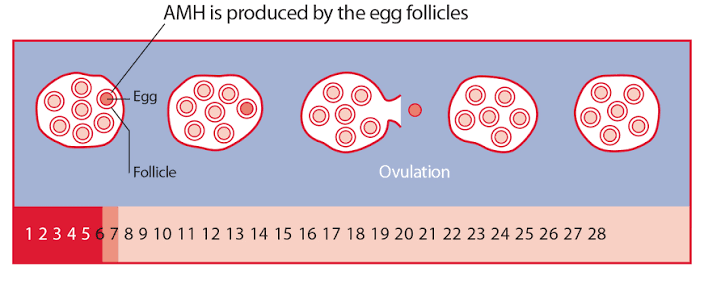 If you have been told you have a low AMH level, it can feel frightening. Many women hear the words “low ovarian reserve” and immediately think it means they cannot get pregnant naturally.
For women considering tubal ligation reversal, that fear can feel even bigger: “If my tubes are repaired, will I still have enough eggs to conceive?”
The answer is more nuanced than a simple yes or no. Low AMH can matter. It can be an important part of fertility planning. But low AMH does not automatically mean you cannot get pregnant naturally.
In fact, one of the biggest misconceptions about ovarian reserve is assuming that AMH is a direct “fertility score.” It is not. AMH gives information about the estimated number of remaining eggs and how the ovaries may respond to fertility medications, especially during IVF. It does not prove whether a woman can or cannot release a healthy egg in a natural cycle.
And in natural conception, it only takes one ovulated egg and one healthy sperm to create a pregnancy.
What Is AMH?
 AMH stands for anti-Müllerian hormone. It is a hormone produced by small developing follicles in the ovaries. Because these follicles are connected to the remaining egg supply, AMH is often used as a marker of ovarian reserve.
In fertility medicine, AMH can be useful. It may help predict how strongly the ovaries could respond to injectable fertility medications. For example, in IVF, a woman with a lower AMH may produce fewer eggs during stimulation than a woman with a higher AMH.
That information can be helpful when planning IVF. But it is not the same as saying a woman with low AMH cannot conceive naturally.
Low AMH Does Not Mean ‘No Ovulation’
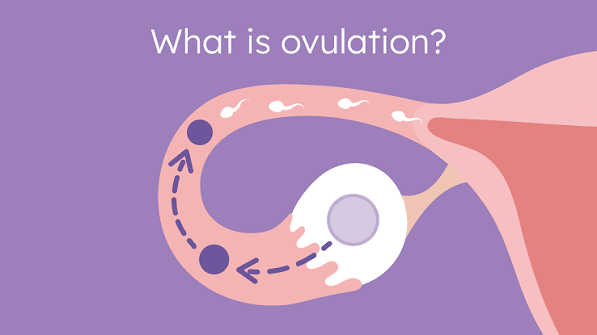
In a natural menstrual cycle, the body does not need to produce ten or fifteen eggs. Usually, several follicles begin developing, but one becomes the dominant follicle and releases one egg during ovulation.
That is why the “low AMH” conversation is different for natural conception than it is for IVF. IVF often tries to stimulate the ovaries to produce multiple mature eggs at once. Natural conception depends on whether the body can ovulate one egg and whether that egg can meet healthy sperm in an open fallopian tube.
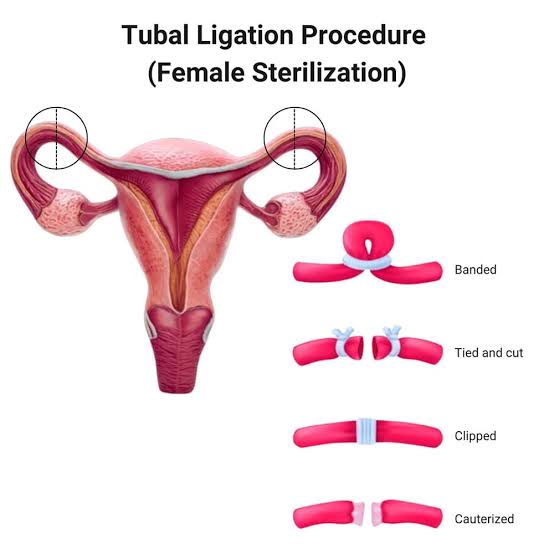 For a woman who has had a tubal ligation, the main barrier to natural pregnancy is often mechanical: the fallopian tubes have been blocked, cut, tied, clipped, or sealed. Tubal reversal surgery is designed to restore the pathway between the ovary, fallopian tube, sperm, and uterus.
If a woman is still having regular menstrual cycles, she may still be ovulating, even if her AMH is low. That does not guarantee pregnancy, but it does mean the situation should be evaluated carefully rather than dismissed too quickly.
What Research Says About AMH and Natural Pregnancy
Several reputable medical sources caution against using AMH alone to predict natural fertility.
The American College of Obstetricians and Gynecologists has stated that using AMH for fertility counseling in women who are not already diagnosed with infertility is not supported by high-quality data. Similarly, research published in JAMA found that among women ages 30 to 44 without a history of infertility, low ovarian reserve biomarkers, including low AMH, were not associated with reduced natural fertility over the study period.
That is an important distinction. Low AMH may suggest a shorter reproductive window or a lower response to ovarian stimulation, but it does not reliably answer the question: “Can I get pregnant this month?”
Age Still Matters
Low AMH should not be ignored, especially for women considering pregnancy after tubal ligation. Age remains one of the most important fertility factors because egg quality declines over time. AMH gives some information about egg quantity, but it does not directly measure egg quality. This means two women with the same AMH level may have very different chances depending on age, menstrual regularity, sperm health, tubal anatomy, and overall reproductive health. A 2021 systematic review and meta-analysis concluded that AMH had poor predictive value for natural pregnancy, and that low AMH was not clearly associated with reduced natural fertility.
For tubal reversal patients, this is why individualized evaluation matters. A low AMH result may mean there is less time to delay. It may also influence whether tubal reversal or IVF is the more appropriate option. But it should not automatically close the door on natural conception.
Why This Matters for Tubal Reversal Patients
 Some women are told that because their AMH is low, IVF is their only option. In certain cases, IVF may be the better recommendation, especially if there are additional fertility concerns such as severe male-factor infertility, irregular or absent ovulation, poor egg quality concerns, or very limited time.
But for other women, especially those who still have regular cycles and no major infertility factors besides the prior tubal ligation, tubal reversal may still be worth considering. After the tubes are repaired and healing is complete, eligible women may have the opportunity to try naturally each month without undergoing a new treatment cycle every time.
That monthly opportunity matters. Tubal reversal is not about forcing the ovaries to make many eggs at once. It is about restoring the natural pathway so that the egg a woman ovulates can meet sperm again.
Low AMH Is Information, Not a Final Answer
A low AMH result can feel discouraging, but it should be viewed as one piece of the fertility picture. It may mean the ovarian reserve is lower than expected. It may mean time is important. It may mean a patient should not wait years before trying to conceive. But it does not automatically mean natural pregnancy is impossible.
 Dr. Paul Harris, at A Personal Choice Tubal Reversal Center in Raleigh, NC, shares that the goal is to help women understand whether tubal reversal is a realistic option based on the full picture: age, menstrual cycles, tubal ligation method, remaining tubal length, partner sperm health, medical history, and fertility goals.
The truth is simple: low AMH can affect fertility planning, but it is not the same as sterility. If you are ovulating, have repairable tubes, and have a partner with viable sperm, pregnancy may still be possible.
It only takes one healthy egg to begin a new chapter.