Search Results for: "fallopian tube"
November 13, 2014 · No Comments
We are so thankful for our Essure reversal, it was a complete success, truly a miracle! Without A Personal Choice, my son would not be here, we will forever be grateful.
Read More
November 04, 2014 · No Comments
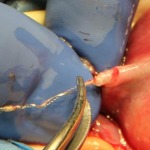
When we first began performing Essure removal, we would remove the devices using manual traction. As we gained more experience, we realized the best way to reduce the risk of breaking the Essure devices was to minimize excessive traction and avoid electrodissection. We now perform en bloc resection of Essure micro-inserts during our Essure removal procedures […]
Read More
November 04, 2014 · No Comments
When performing Essure removal surgery, we use a uterine tourniquet. This practice makes Essure removal surgery easier, safer, and allows us more precision during coil dissection. A uterine tourniquet allows better hemostasis during Essure removal surgery. Better hemostasis decreases surgeon anxiety. Our visualization is better when hemostasis is adequate. Better visualization allows for a more […]
Read More
November 04, 2014 · No Comments
Removing Essure devices intact can be done with manual traction. In our experience, we have found this is most easily done within the first several months of insertion and before the inserts become locked in place from fibroelastic tissue. With gradual in-growth of fibroelastic tissue, removing Essure micro-inserts will become increasingly more difficult to remove […]
Read More
November 04, 2014 · No Comments
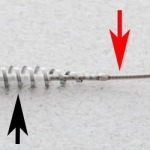
The Essure device is 4 cm long. The manufacturer recommends 3 to 8 turns of the outer coil be allowed to project into the uterine cavity to insure adequate placement. When properly placed approximately 1 to 2 cm of the Essure device should project beyond the myometrial wall and into the isthmic section of each fallopian […]
Read More
November 03, 2014 · No Comments
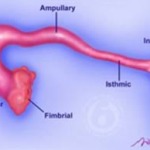
Avoiding leaving Essure fragments during Essure removal requires awareness of the anatomic variations of the interstitial portion of the fallopian tube. Anatomic variations may contribute to increased difficulty with some Essure insertions, be the cause for some Essure complications, and may increase the difficulty of intact micro-insert removal. Anatomic variations in the interstitial portion of the tube will result […]
Read More
September 22, 2014 · No Comments
Vasectomy reversal is comparable in safety to vasectomy. The risks of vasectomy are outlined below from most common to least common. The main risk of vasectomy reversal is that pregnancy may not occur. The least common risks are severe infection or chronic pain as a result of the procedure. Failure to achieve pregnancy The main […]
Read More
September 11, 2014 · No Comments
What symptoms did you experience after your Essure coils were inserted? The following were answers provided by survey participants when asked what was the reason(s) for Essure device removal. Everything felt swollen up and I had pain most of the time including a lot of lower back pain. Cramping for weeks at a time, not […]
Read More
September 11, 2014 · No Comments
Essure and Adiana hysteroscopic tubal sterilizations can be reversed. Essure and Adiana are two new methods blocking the fallopian tubes that have been recently introduced in the US. These tubal ligation techniques can be performed in the doctor’s office using a hysteroscope. They avoid having a surgical incision and do not require general anesthesia. Because […]
Read More





 Birth Announcements
 Birth Announcements
 Birth Announcements
 Birth Announcements
 Birth Announcements
 Birth Announcements

